Graph RAG:基于知识图谱的检索增强生成技术实践
本文系统解析 Graph RAG 的核心思想、实现路径与优化策略,探讨如何利用结构化知识图谱提升大模型问答的准确性与可解释性。
一、引言:RAG 的演进与结构化知识的缺失
检索增强生成(Retrieval-Augmented Generation, RAG)已成为缓解大语言模型幻觉、注入领域知识的关键技术。传统 RAG 方案(如 LlamaIndex 的向量检索)主要依赖非结构化文本的语义相似度匹配,虽具通用性,却面临语义歧义与领域无关性的挑战。
典型案例:用户查询“保温大棚的温度控制方案”,基于 Embedding 的向量检索可能召回大量“保温杯材料特性”相关内容——二者在通用语义空间中相似度高,但在农业领域场景下完全无关。这种“语义近似但领域相斥”的问题,正是传统 RAG 的痛点。
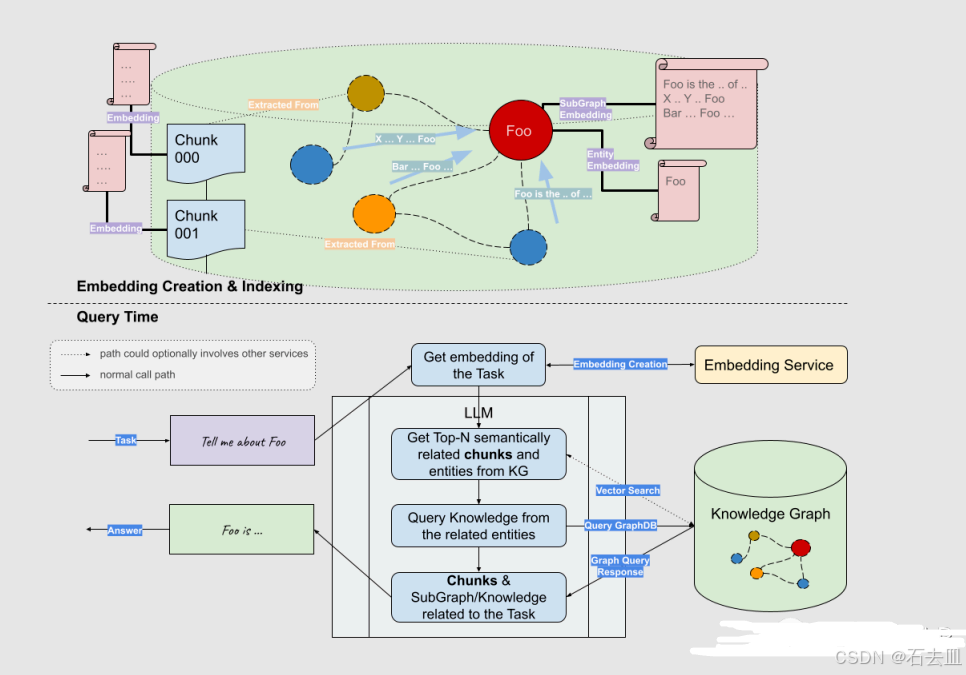
Graph RAG 的提出,正是为了将结构化知识图谱作为独立召回通道,利用实体-关系的显式关联约束检索边界,从源头上抑制无关上下文的引入。
二、Graph RAG 核心思想
Graph RAG 将知识图谱视为一个超大规模结构化词汇表:
- 实体(如“NASA”、“Peter Quill”)对应词汇单元
- 关系(如“announces”、“discovers”)构成语义连接
- 子图(Subgraph)作为最小语义单元参与检索
其核心流程可概括为三步:
#mermaid-svg-0rKCfAFqddHnYTV2{font-family:\”trebuchet ms\”,verdana,arial,sans-serif;font-size:16px;fill:#333;}@keyframes edge-animation-frame{from{stroke-dashoffset:0;}}@keyframes dash{to{stroke-dashoffset:0;}}#mermaid-svg-0rKCfAFqddHnYTV2 .edge-animation-slow{stroke-dasharray:9,5!important;stroke-dashoffset:900;animation:dash 50s linear infinite;stroke-linecap:round;}#mermaid-svg-0rKCfAFqddHnYTV2 .edge-animation-fast{stroke-dasharray:9,5!important;stroke-dashoffset:900;animation:dash 20s linear infinite;stroke-linecap:round;}#mermaid-svg-0rKCfAFqddHnYTV2 .error-icon{fill:#552222;}#mermaid-svg-0rKCfAFqddHnYTV2 .error-text{fill:#552222;stroke:#552222;}#mermaid-svg-0rKCfAFqddHnYTV2 .edge-thickness-normal{stroke-width:1px;}#mermaid-svg-0rKCfAFqddHnYTV2 .edge-thickness-thick{stroke-width:3.5px;}#mermaid-svg-0rKCfAFqddHnYTV2 .edge-pattern-solid{stroke-dasharray:0;}#mermaid-svg-0rKCfAFqddHnYTV2 .edge-thickness-invisible{stroke-width:0;fill:none;}#mermaid-svg-0rKCfAFqddHnYTV2 .edge-pattern-dashed{stroke-dasharray:3;}#mermaid-svg-0rKCfAFqddHnYTV2 .edge-pattern-dotted{stroke-dasharray:2;}#mermaid-svg-0rKCfAFqddHnYTV2 .marker{fill:#333333;stroke:#333333;}#mermaid-svg-0rKCfAFqddHnYTV2 .marker.cross{stroke:#333333;}#mermaid-svg-0rKCfAFqddHnYTV2 svg{font-family:\”trebuchet ms\”,verdana,arial,sans-serif;font-size:16px;}#mermaid-svg-0rKCfAFqddHnYTV2 p{margin:0;}#mermaid-svg-0rKCfAFqddHnYTV2 .label{font-family:\”trebuchet ms\”,verdana,arial,sans-serif;color:#333;}#mermaid-svg-0rKCfAFqddHnYTV2 .cluster-label text{fill:#333;}#mermaid-svg-0rKCfAFqddHnYTV2 .cluster-label span{color:#333;}#mermaid-svg-0rKCfAFqddHnYTV2 .cluster-label span p{background-color:transparent;}#mermaid-svg-0rKCfAFqddHnYTV2 .label text,#mermaid-svg-0rKCfAFqddHnYTV2 span{fill:#333;color:#333;}#mermaid-svg-0rKCfAFqddHnYTV2 .node rect,#mermaid-svg-0rKCfAFqddHnYTV2 .node circle,#mermaid-svg-0rKCfAFqddHnYTV2 .node ellipse,#mermaid-svg-0rKCfAFqddHnYTV2 .node polygon,#mermaid-svg-0rKCfAFqddHnYTV2 .node path{fill:#ECECFF;stroke:#9370DB;stroke-width:1px;}#mermaid-svg-0rKCfAFqddHnYTV2 .rough-node .label text,#mermaid-svg-0rKCfAFqddHnYTV2 .node .label text,#mermaid-svg-0rKCfAFqddHnYTV2 .image-shape .label,#mermaid-svg-0rKCfAFqddHnYTV2 .icon-shape .label{text-anchor:middle;}#mermaid-svg-0rKCfAFqddHnYTV2 .node .katex path{fill:#000;stroke:#000;stroke-width:1px;}#mermaid-svg-0rKCfAFqddHnYTV2 .rough-node .label,#mermaid-svg-0rKCfAFqddHnYTV2 .node .label,#mermaid-svg-0rKCfAFqddHnYTV2 .image-shape .label,#mermaid-svg-0rKCfAFqddHnYTV2 .icon-shape .label{text-align:center;}#mermaid-svg-0rKCfAFqddHnYTV2 .node.clickable{cursor:pointer;}#mermaid-svg-0rKCfAFqddHnYTV2 .root .anchor path{fill:#333333!important;stroke-width:0;stroke:#333333;}#mermaid-svg-0rKCfAFqddHnYTV2 .arrowheadPath{fill:#333333;}#mermaid-svg-0rKCfAFqddHnYTV2 .edgePath .path{stroke:#333333;stroke-width:2.0px;}#mermaid-svg-0rKCfAFqddHnYTV2 .flowchart-link{stroke:#333333;fill:none;}#mermaid-svg-0rKCfAFqddHnYTV2 .edgeLabel{background-color:rgba(232,232,232, 0.8);text-align:center;}#mermaid-svg-0rKCfAFqddHnYTV2 .edgeLabel p{background-color:rgba(232,232,232, 0.8);}#mermaid-svg-0rKCfAFqddHnYTV2 .edgeLabel rect{opacity:0.5;background-color:rgba(232,232,232, 0.8);fill:rgba(232,232,232, 0.8);}#mermaid-svg-0rKCfAFqddHnYTV2 .labelBkg{background-color:rgba(232, 232, 232, 0.5);}#mermaid-svg-0rKCfAFqddHnYTV2 .cluster rect{fill:#ffffde;stroke:#aaaa33;stroke-width:1px;}#mermaid-svg-0rKCfAFqddHnYTV2 .cluster text{fill:#333;}#mermaid-svg-0rKCfAFqddHnYTV2 .cluster span{color:#333;}#mermaid-svg-0rKCfAFqddHnYTV2 div.mermaidTooltip{position:absolute;text-align:center;max-width:200px;padding:2px;font-family:\”trebuchet ms\”,verdana,arial,sans-serif;font-size:12px;background:hsl(80, 100%, 96.2745098039%);border:1px solid #aaaa33;border-radius:2px;pointer-events:none;z-index:100;}#mermaid-svg-0rKCfAFqddHnYTV2 .flowchartTitleText{text-anchor:middle;font-size:18px;fill:#333;}#mermaid-svg-0rKCfAFqddHnYTV2 rect.text{fill:none;stroke-width:0;}#mermaid-svg-0rKCfAFqddHnYTV2 .icon-shape,#mermaid-svg-0rKCfAFqddHnYTV2 .image-shape{background-color:rgba(232,232,232, 0.8);text-align:center;}#mermaid-svg-0rKCfAFqddHnYTV2 .icon-shape p,#mermaid-svg-0rKCfAFqddHnYTV2 .image-shape p{background-color:rgba(232,232,232, 0.8);padding:2px;}#mermaid-svg-0rKCfAFqddHnYTV2 .icon-shape rect,#mermaid-svg-0rKCfAFqddHnYTV2 .image-shape rect{opacity:0.5;background-color:rgba(232,232,232, 0.8);fill:rgba(232,232,232, 0.8);}#mermaid-svg-0rKCfAFqddHnYTV2 .label-icon{display:inline-block;height:1em;overflow:visible;vertical-align:-0.125em;}#mermaid-svg-0rKCfAFqddHnYTV2 .node .label-icon path{fill:currentColor;stroke:revert;stroke-width:revert;}#mermaid-svg-0rKCfAFqddHnYTV2 :root{–mermaid-font-family:\”trebuchet ms\”,verdana,arial,sans-serif;}
用户Query
实体识别与扩展
子图检索(N跳)
上下文合成
LLM生成答案
关键创新:不再将文本片段作为检索单元,而是以“实体-关系-实体”构成的路径(Path)为基本召回粒度,实现语义精确约束。
三、技术实现:三阶段 pipeline
阶段 1:关键实体提取
def _get_key_entities(query_str: str, llm, with_llm: bool = True) –> List[str]:
"""
从Query中提取核心实体,并扩展同义词/别名
– 方案A:基于LLM的命名实体识别(高精度,高成本)
– 方案B:基于规则/词典的关键词提取(低延迟,需领域词典)
"""
if with_llm:
prompt = f"Extract key entities from: {query_str}. Return as JSON list."
response = llm.complete(prompt)
entities = json.loads(response.text)
else:
# 简化版:正则+停用词过滤
entities = [w for w in jieba.lcut(query_str) if len(w) > 1 and w not in STOP_WORDS]
return _expand_synonyms(entities) # 扩展别名:如“NASA”→["美国国家航空航天局"]
阶段 2:子图检索(N-hop Expansion)
以提取的实体为起点,在知识图谱中进行 N 跳遍历,构建上下文子图:
def _retrieve_subgraph_context(entities: List[str], max_hops: int = 2) –> str:
"""
从图数据库(如Nebula Graph)检索N跳子图
返回格式:subject [predicate, object, predicate_next, object_next…]
"""
cypher_queries = []
for entity in entities:
# 构造2跳Cypher查询
query = f"""
MATCH (s {{name: '{entity}'}})-[r1]->(o1)
OPTIONAL MATCH (o1)-[r2]->(o2)
RETURN s.name AS subject,
r1.type AS pred1, o1.name AS obj1,
r2.type AS pred2, o2.name AS obj2
LIMIT 20
"""
cypher_queries.append(query)
results = execute_cypher_batch(cypher_queries)
return _format_triplets(results) # 格式化为LLM可读的文本
输出示例(NASA 事件查询):
nasa ['public release date', 'mid-2023']
nasa ['announces', 'future space telescope programs']
nasa ['publishes images of', 'debris disk']
nasa ['discovers', 'exoplanet lhs 475 b']
阶段 3:答案合成
将结构化子图转换为自然语言上下文,交由 LLM 生成最终答案:
def _synthesize_answer(query_str: str, graph_context: str, llm) –> str:
prompt = f"""
Based on the following knowledge triplets, answer the question accurately.
Knowledge:
{graph_context}
Question: {query_str}
Answer:
"""
return llm.complete(prompt).text
完整 pipeline 封装
def graph_rag_pipeline(query: str, graph_store, llm) –> str:
entities = _get_key_entities(query, llm)
subgraph_context = _retrieve_subgraph_context(entities, max_hops=2)
return _synthesize_answer(query, subgraph_context, llm)
四、实战案例:NASA 事件查询
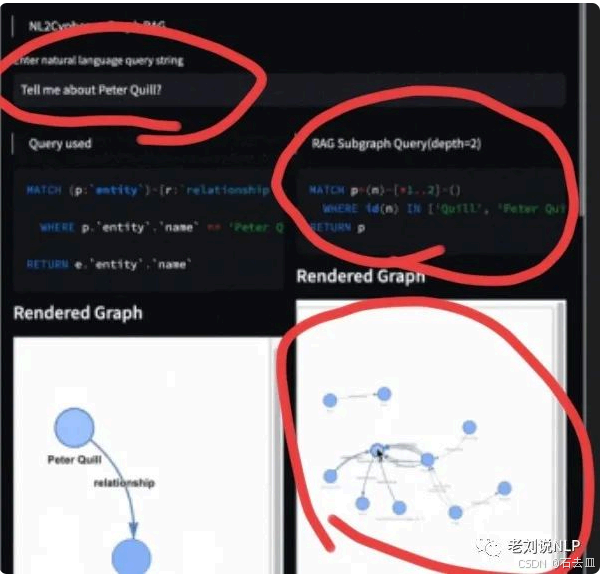
用户输入:
Tell me events about NASA
执行流程:
“NASA 近期发布了多项重要事件:于2023年中公开了系外行星LHS 475 b的发现;公布了新一代太空望远镜计划;并发布了围绕恒星的碎片盘高清图像。”
关键优势:
- 避免召回“NASA宇航员饮食”“NASA总部地址”等无关信息
- 通过“事件”关系约束,精准定位动态行为类知识
五、优化策略:路径排序机制
当图谱规模庞大时,N跳子图可能包含大量噪声路径。
引入两级排序机制可显著提升召回质量:
粗排阶段(LightGBM 特征工程)
| 文本相似度 | 字符/词重合数、Jaccard相似度、编辑距离 |
| 图结构特征 | 路径跳数、实体数、关系数、路径长度 |
| 语义对齐 | Query与Path是否共现数字、专有名词 |
# 特征示例
features = {
"char_overlap": len(set(query) & set(path)),
"hop_count": path.hops,
"entity_count": len(path.entities),
"has_number": has_digit(query) and has_digit(path.text)
}
# 保留Top-K路径进入精排
精排阶段(语义匹配模型)
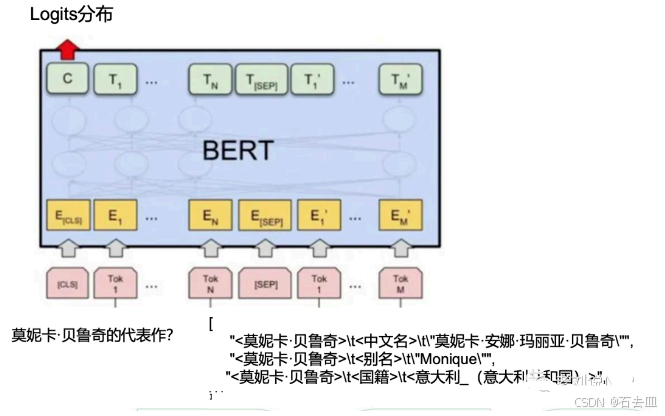
使用预训练语言模型(如 BERT)计算 Query 与候选路径的语义匹配得分:
from transformers import AutoTokenizer, AutoModel
import torch.nn.functional as F
def semantic_rerank(query: str, candidate_paths: List[str]) –> List[str]:
tokenizer = AutoTokenizer.from_pretrained("bert-base-uncased")
model = AutoModel.from_pretrained("bert-base-uncased")
# 编码Query与所有候选路径
inputs = tokenizer([query] + candidate_paths, padding=True, return_tensors="pt")
embeddings = model(**inputs).last_hidden_state[:, 0, :] # [CLS]向量
# 计算余弦相似度
query_emb = embeddings[0]
path_embs = embeddings[1:]
scores = F.cosine_similarity(query_emb, path_embs)
# 按得分排序,返回Top-3
top_indices = torch.topk(scores, k=3).indices
return [candidate_paths[i] for i in top_indices]
六、Graph RAG vs 传统 RAG 对比
| 知识形式 | 非结构化文本 | 结构化三元组 | 文本+图谱双路召回 |
| 抗歧义能力 | 弱(依赖Embedding质量) | 强(关系显式约束) | 最优 |
| 可解释性 | 低(黑盒相似度) | 高(路径可视化) | 中 |
| 构建成本 | 低(仅需文本向量化) | 高(需图谱构建/对齐) | 中高 |
| 适用场景 | 通用问答、文档摘要 | 领域知识问答、关系推理 | 企业级知识库 |
实践建议:在医疗、金融、工业等强领域场景,优先采用“向量检索 + 图谱召回”双路融合策略,通过加权或重排序融合结果。
七、挑战与展望
当前局限
未来方向
- 动态图谱构建:结合LLM从文本中实时抽取三元组,补充静态图谱
- 图神经网络增强:用GNN学习子图表示,替代简单路径拼接
- 多模态图谱融合:将图像、时序数据嵌入统一知识图谱
八、结语
Graph RAG 并非要取代传统向量检索,而是为 RAG 体系增加结构化知识约束维度。在领域知识密集、关系推理关键的场景中,它能有效抑制幻觉、提升答案可信度。随着知识图谱自动化构建技术的成熟,Graph RAG 有望成为企业级 AI 应用的标配组件。
核心价值:当大模型“知道什么”(What)时,知识图谱告诉它“如何关联”(How)——这正是可信 AI 的基石。
参考实现:
- LlamaIndex Knowledge Graph Index:llama_index.indices.knowledge_graph
- Nebula Graph + LangChain 集成方案
- 开源项目:Microsoft GraphRAG(社区版)
本文技术思路参考自社区实践,代码示例为简化演示,生产环境需考虑缓存、限流、实体标准化等工程细节。