python学习原因
-
渗透方向:
-
1.网络扫描何枚举
-
2.漏洞开发
-
3.密码破解
-
4.web应用测试
-
5.流量包,嗅探
-
6.社工
-
-
应急响应方向:
-
1.配置管理
-
2.安全自动化
-
3.密码管理
-
4.安全监控
-
5.身份验证
-
-
python的特点:
-
1.跨平台
-
2.解释型
-
3.脚本语言
-
4.动态语言
-
5.默认utf8编码
-
配置python (以kali为例)
-
创建.vimrc文件
set nocompatible
set number
set nowrap
set showmatch
set scrolloff=3
set encoding=utf-8
set fenc=utf-8
set mouse=a
set hlsearch
syntax on
au BufNewFile,BufRead *.py
set tabstop=4
set softtabstop=4
set shiftwidth=4
set textwidth=79
set expandtab
set autoindent
set fileformat=unix
-
创建python文件
数据类型与变量
-
None和Bool
-
None
-
表示空对象
-
-
Bool
-
Python中使用True和False来表示布尔值,注意首字母大写,即判断Python对象、返回值、表达式真假的一组特殊数据类型
-
-
-
保留字
-
保留字,又称为关键字,每种语言都有自己的一套预先保留的特殊标识符,Python也不例外,它自带的keyword模块可以查看全部关键字
-
内置函数
| abs() | divmod() | input() | open() | staticmethod() |
| all() | enumerate() | int() | ord() | str() |
| any() | eval() | isinstance() | pow() | stum() |
| basestring() | execfile() | issubclass() | print() | super() |
| bin() | file() | iter() | property() | tuple() |
| bool() | filter() | len() | range() | type() |
| bytearray() | float() | list() | raw_input() | unichr() |
| callable() | format() | locals() | reduce() | unicode() |
| chr() | frozenset() | long() | reload() | vars() |
| classmethod() | getattr() | map() | repr() | xrange() |
| cmp() | globals() | max() | reversed() | zip() |
| compile() | hasattr() | memoryview() | round() | _import_() |
| complex() | hash() | min() | set() | |
| delattr() | help() | next() | setattr() | |
| dict() | hex() id() | object() | slice() | |
| dir() | id() | oct() | sorted() |
变量
-
编程语言中为了能够更好的处理数据,都需要使用一些变量。变量基本上就是代表(或是引用某值的名字)。Python语言的变量可以是各种不同的数据类型,使用变量的时候不需要声明,Python解释器会自动判断数据类型。使用 type(变量) 可以查看该变量的类型
-
变量命名规则
-
驼峰命名法
-
下划线命名法
-
-
空行, 缩进, 多行代码
-
空行
-
一般空行用于不同函数之间、不同类之间、以及类和函数之间进行分隔。空行不是Python的语法,即使不插入空行程序运行也不会出错。插入空行主要目的是方便代码阅读以及日后的维护
-
-
字符串
-
概念
-
Python3 中的字符串可以使用双引号或单引号标示,如果字符串中出现引号,则可以使用 \\ 来去除引号标示字符串的特殊作用
-
-
常用属性和方法
-
count
-
split 和 strip
-
split分割
-
str1 = 'hello world'
list1 = str1.split()
## 输出 ['hello', 'world']str2 = 'hello:world'
list2 = str2.split(':')
## 输出 ['hello', 'world']
-
str1 = 'hello world'
-
strip去除
-
str2 = ' hello '
list2 = str2.strip()
## 输出 'hello'
-
str2 = ' hello '
-
-
upper 和 lower
-
upper全部大写
-
lower全部小写
-
-
__len__
-
str.__len__()
len(str)
## 这两种都可以
-
str.__len__()
-
运算符
-
算术运算符
运算符名称描述 + 加 两个对象相加 – 减 得到负数或是一个数减去另- 个数 * 乘 两个数相乘或是返回 个被重复若干次的字符串 / 除 ×除以 y % 取模 返回除法的余数 ** 幂 返回×的y次幂 // 取整除 返回商的整数部分 (向下取整) -
比较运算符
运算符描述 == 等于:比较对象是否相等 != 不等于:比较两个对象是否不相等 > 大于:返回×是否大于y < 小于:返回×是否小于 y >= 大于等于:返回×是否大于等于y <= 小于等于:返回×是否小于等于y -
赋值运算符
运算符描述实例 = 简单的赋值运算符 c= a+b 将a+b的运算结果赋值为 c += 加法赋值运算符 c+=a等效于c=c+a -= 减法赋值运算符 c-=a等效于c=c-a *= 乘法赋值运算符 c*=a等效于c=c*a /= 除法赋值运算符 c /= a 等效于c= c/a %= 取模赋值运算符 c%= a等效于 c = c % a **= 幂赋值运算符 c *= a 等效于 c= c **a //= 取整除赋值运算符 c //= a 等效干 c= c // a -
逻辑运算符
运算符逻辑表达式描述 and x and y 布尔"与": 如果×为 False,× and y 返回 False,否则它返回 y 的计算值 or x or y 布尔"或": 如果×是非0,它返回×的值,否则它返回y的计算值 not not x 布尔"非": 如果x为 True,返回 False。如果×为 False,它返回 True -
成员运算符
运算符描述 in 如果在指定的序列中找到值返回True,否则返回False not in 如果在指定的序列中没有找到值返回True,否则返回False -
身份运算符
运算 符描述实例 is is 是判断两个标识符是不是引 用自一个对象 x is y, 类似 id(x) == id(y),如果引l用的是同一个对象则返回 True,否则返回False is not isnot是判断两个标识符是不 是引用自不同对象 x is not y ,类似 id(a) != id(b)。如果引l用的不是同一个对象则 返回结果True,否则返回False -
运算符优先级
运算符描述 ** 指数 (最高优先级) ~± 按位翻转,一元加号和减号(最后两个的方法名为+@ 和-@) * / % // 乘,除,取模和取整除 ± 加法减法
判断与循环
-
for循环
-
while循环
-
break关键字
-
continue关键字
命令行参数
-
模块
-
__name__和__main__
#!/usr/bin/env python3
print('__name__ value is :{}'.format(__name__)) -
引入模块的方式
-
模块的搜索路径
-
import xxxx
-
from xxx import xxx
-
from xxx import xxx as xxx
-
-
搜索的搜索路径
-
包
-
pip常用命令:
-
显示版本和路径:
-
pip3 –version
-
-
升级 pip: sudo pip3 install-upgrade pip
-
安装包:(sudo)pip3 install package, 如果需要指定版本就是:pip3 install package:==1.0.3 (写具体的版本号)
-
卸载包
-
pip3 uninstall package
-
-
升级包
-
pip3 install-upgrade package
-
可以使用 ==,>=,<=,<,> 来指定版本号
-
-
-
查看安装已安装的包
-
pip3 list
-
-
把需要安装的一系列包写入requirements.txt文件中, 然后执行:pip3 install-r requirements.txt
-
列表
-
是一种有序的数据集合, 可以通过索引访问到每一个列表的元素
-
course.append('xxx')
-
course.insert('xxx')
-
course.remove('xxx')
-
course.extend('xxx')
-
course.pop('xxx')
元组 (tuple)
-
是一种特殊的列表, 不同点是元组一旦创建就不能修改, 类似列表的所有会修改列表内容的操作等对于元组都不再适用
-
t1 = ('C')
type(t1) ## 字符型t2 = ('C',)
type(t2) ## 元组型
集合 (set)
-
是一个无序不重复元素的数据集, 对比列表的区别首先是无序的, 不可以使用索引进行顺序的访问, 另外一个特点是不能够有重复的数据
-
()是元组
-
[]是数组
-
{}是集合
-
-
course.add('xxx')
-
course.remove('xxx')
-
去重判断
-
add
-
集合的运算
-
set1 | set2 或运算 (并集)
-
重复的不算
-
-
set1 & set2 和运算 (交集)
-
算重复的
-
-
set1 – set2
-
将set1中的set2去除
-
-
set1 ^ set2
-
重复的去除
-
-
字典 (dict)
-
是无序的键值对集合, 字典中的每一个元素都是一个 key 和一个 value 的组合, key值在字典中必须是唯一的, 因为可以很方便的从字典中使用key获取其对应的 value 的值
-
coursesdict.get(1)
-
coursesdict.keys()
-
coursesdict.values()
-
coursesdict[1]
-
coursesdict.pop(2)
数据类型的转换
| int(x, base) | 将 × 转换为一个整数 |
| float(x) | 将 × 转换为 个浮点数 |
| str(x) | 将对象 × 转换为字符串 人 |
| list(s) | 将序列 s 转换为 个列表 |
| tuple(s) | 将序列 s 转换为- -个元组 |
| set(s) | 将序列 s 转换为可变集合 |
| dict(d) | 创建一个字典,d 必须是 个序列 (key,value)元组 |
函数
-
定义
-
返回值
-
作用域
-
全局变量
-
局部变量
-
-
函数的参数
-
必选参数
-
默认参数
-
可变参数
-
关键字参数
-
文件处理
-
文件处理是项目开发中使数据持久化和获取配置的主要方式。我们在平时的工作中接触到各种文件类型,比如 word、视频、txt文本等。Python中提供了很方便读写文件的函数,可以很方便的处理各种类型的文件
-
I/O
-
标准输入输出流
-
-
open/close
-
file = open('xxx')
-
file.close()
-
with open('xxx') as file:
-
filename = 'xxx'
-
with open(filename) as file:
-
-
读取文件内容
-
file.readline()
-
-
文件写入与读取
-
## 写入
filename = 'xxx'
with open(filename, 'w') as f:
f.write('xxx')## 读取
filename = 'xxx'
with open(filename, 'r') as f:
print(file.readlines())## 追加
filename = 'xxx'
with open(filename, 'a') as f:
file.write('xxx')
-
-
json序列化
-
import pickle
courses = {1: 'Linux', 2: 'vim', 3: 'Java'}
with open('./courses.data', 'wb') as file:
pickle.dump(courses, file)
with open('./courses.data', 'rb') as file:
new_courses = pickle.load(file)## new_courses 输出 {1: 'Linux', 2: 'vim', 3: 'Java'}
import json
courses
json.dumps(courses)
with open('courses.json', 'w') as f:
f.write(json.dumps(courses))## cat courses.json 得到 {1: 'Linux', 2: 'vim', 3: 'Java'}
-
-
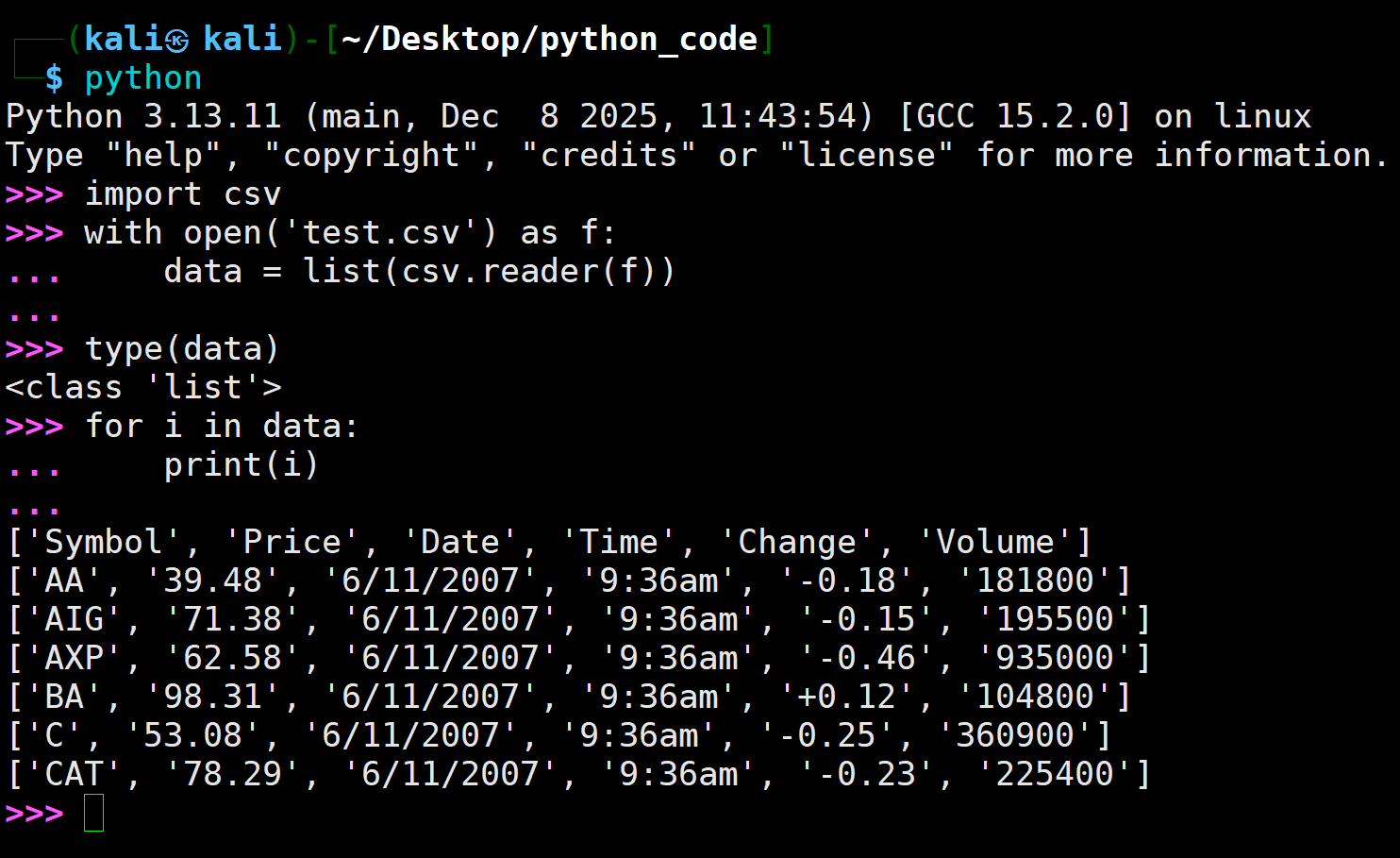
csv文件读取 (逗号分隔值)
异常
-
#!/usr/bin/env python3
filename = '/etc/protocols'
f = open(filename)
try:
f.write('1111')
except:
# raise:
print('file write error')
finally:
print('finally')
f.close()
面向对象
-
面向对象编程 (OOB)
-
核心概念
-
抽象
-
封装
-
继承
-
多态
-
-
-
类与对象
-
类
-
用来描述具有相同的属性和方法的对象的集合。它定义了该集合中每个对象所共有的属性和方法
-
class 类名
-
属性
-
方法
-
代码块 ()
-
-
-
对象
-
对象:某个类的一个实体,当有了对象后,这些属性便有了属性值,行为也就有了相应的意义
-
new 对象名
-
对象名 = 类名 ()
-
-
-
-
实例方法
-
类中定义函数的方法与普通函数方法区别
-
类中的函数必须有个self参数, 且处于第一位置, 用来表示实例化对象的引用
-
-
-
封装
-
在面向对象的语言中, 封装就是用类将数据与基于数据的操作封装在一起, 隐藏内部数据, 对外提供公共的访问接口
#!/usr/bin/env python3
class Dog(object):
def __init__(self, name):
self.name = name
def get_name(self):
return self.name
def set_name(self, value):
self.name = value
def bark(self):
print(self.get_name() + 'is making sound wangwang!')class Cat(object):
def __init__(self, name):
self.name = name
def get_name(self):
return self.name
def set_name(self, value):
self.name = value
def bark(self):
print(self.get_name() + 'is making sound miaomiaomiao!')dog = Dog('laifu')
cat = Cat('kitty')dog.bark()
cat.bark()
-
-
继承
-
继承就是子类继承父类的特征和行为,使得子类对象(实例)具有父类的实例域和方法,或子类从父类继承方法,使得子类具有父类相同的行为
-
单继承
#!/usr/bin/env python3
class Animal(object):
def __init__(self,name):
self.name = namedef get_name(self):
return self.namedef set_name(self,value):
self.name = valuedef make_sound(self):
passclass Dog(Animal):
def make_sound(self):
print(self.get_name()+' is making sound wowowowowo')class Cat(Animal):
def make_sound(self):
print(self.get_name()+ ' is making sound miao miao miao')dog = Dog('er ha')
cat = Cat('jafei')dog.make_sound()
cat.make_sound() -
多继承
#!/usr/bin/env python3
class A:
def __init__(self):
self.name = 'wuyue'def gongfuA(self):
print('———python———')class B:
def __init__(self):
self.age = 38def gongfuA(self):
print('———–XSS——–')class XueYuan(A,B):
def __init__(self):
A.__init__(self)
B.__init__(self)def testXY(self):
print('———xueyuan——-')person = XueYuan()
person.gongfuA()
print(XueYuan.mro())
#person.gongfuB()
#person.testXY()
-
-
多态
-
指的是一类事物有多种形态,一个抽象类有多个子类(因而多态的概念依赖于继承),不同的子类对象调用相同的方法,产生不同的执行结果,多态可以增加代码的灵活度
-
形式上的非多态
#!/usr/bin/env python3
class Duck():
def who(self):
print('i am a duck')class Dog():
def who(self):
print('i am a dog')class Cat():
def who(self):
print('i am a cat')duck = Duck()
dog = Dog()
cat = Cat()duck.who()
dog.who()
cat.who() -
形式上的多态
#!/usr/bin/env python3
class Animal():
def who(self):
print('i am an animal')class Duck(Animal):
def who(self):
print('i am a duck')class Dog(Animal):
def who(self):
print('i am a dog')class Cat(Animal):
def who(self):
print('i am a cat')duck = Duck()
dog = Dog()
cat = Cat()duck.who()
dog.who()
cat.who() -
实际上的多态
#!/usr/bin/env python3
class Animal():
def who(self):
print('i am an animal')class Duck(Animal):
def who(self):
print('i am a duck')class Dog(Animal):
def who(self):
print('i am a dog')class Cat(Animal):
def who(self):
print('i am a cat')def func(obj):
obj.who()duck = Duck()
dog = Dog()
cat = Cat()func(duck)
func(dog)
func(cat)
-
-
私有属性和方法
class Person:
def __init__(self, name, age, secret):
self.name = name # 公有
self._age = age # 约定私有(程序员间默契)
self.__secret = secret # 真正私有(名称改写)def show(self):
print(f"名字: {self.name}")
print(f"年龄: {self._age}")
print(f"秘密: {self.__secret}")p = Person("小明", 18, "我喜欢隔壁班小红")
# 可以访问的
print(p.name) # 小明
print(p._age) # 18 (能访问,但不建议)
# print(p.__secret) # AttributeError: 'Person' object has no attribute '__secret'# 但其实可以通过“改写后的名字”访问(不推荐这么干)
print(p._Person__secret) # 我喜欢隔壁班小红 ← 这就是名称改写p.show() # 正常输出所有信息
-
类属性
#!/usr/bin/env python3
class Animal(Object):
owner = 'xxx'
def __init__(self, name):
self.name = nameprint(Animal.owner)
-
类方法
#!/usr/bin/env python3
class Animal(object):
owner = 'xxx'
def __init__(self, name):
self.name = name@classmethod
def get_owner(cls):
return cls.owner@classmethod
def set_owner(cls, name):
cls.owner = nameprint(Animal.owner)
Animal.set_owner('chenchen')
print(Animal.owner) -
静态方法
-
一个函数完全可以放到类外卖单独实现, 但是这个函数和类有一定的逻辑关系, 放入类中更好理解, 更好组织代码理解, 这种情况适用静态方法
#!/usr/bin/env python3
class Animal(object):
owner = 'xxx'
def __init__(self, name):
self.name = name@staticmethod
def order_animal_food():
print('111')
print('ok')Animal.order_animal_food()
-
-
魔术方法
# 例如
__init__
__new__
__del__
Python 高级特性
-
装饰器
-
装饰器是给现有的模块增添新的小功能,可以对原函数进行功能扩展,而且还不需要修改原函数的内容,也不需要修改原函数的调用
-
-
迭代器
-
对于python中的对象, 只要它定义了可以返回一个迭代器的 __iter__ 方法后, 或者定义了可以支持下表索引的 __getitem__ 方法, 那么它就是一个可迭代对象, 对可迭代对象使用 __iter__ 方法后, 会返回一个迭代器
# 这是一个普通列表(不是迭代器)
lst = [10, 20, 30]# 把它变成迭代器
it = iter(lst) # 相当于售票员开始上班print(next(it)) # 10
print(next(it)) # 20
print(next(it)) # 30
# print(next(it)) # 再要 → StopIteration(报错)# ————————————
# for循环其实偷偷帮你做了这三件事:
# 1. it = iter(可迭代对象)
# 2. while True:
# 3. try: x = next(it)
# 4. except StopIteration: break
-
-
生成器 (迭代器)
-
在python中, 一边迭代 (循环) 一边计算的机制, 称为生成器, 生成器能够迭代的关键是因为他有一个 __next__ 方法
# 普通函数:一次性全做完
def 全部数字():
result = []
for i in range(1, 1000001):
result.append(i)
return result# —————————————-
# 生成器:超级懒,一次给一个
def 懒惰数字():
for i in range(1, 1000001):
yield i # “给你一个,暂停,等你再来要” -
使用 yield 编写生成器 (构造斐波那契数列生成器)
#!/usr/bin/env python
def fib(n):
current = 0
a, b = 1, 1
while current < n:
yield a
a, b = b, a + b
current += 1f5 = fib(5)
for i in f5:
print(i)
-
-
高阶函数
-
接收函数作为参数的函数
-
常见
def process_numbers(numbers, operation):
result = []
for num in numbers:
result.append(operation(num))
return resultdef square(x):
return x * xdef double(x):
return x * 2def make_negative(x):
return –xnums = [1, 4, –3, 7]
print(process_numbers(nums, square)) # [1, 16, 9, 49]
print(process_numbers(nums, double)) # [2, 8, -6, 14]
print(process_numbers(nums, make_negative)) # [-1, -4, 3, -7] -
更高级
numbers = [5, –2, 8, –1, 10, 3]
# map:对每个元素都应用函数
squared = list(map(square, numbers))
print(squared) # [25, 4, 64, 1, 100, 9]# filter:保留函数返回 True 的元素
positives = list(filter(lambda x: x > 0, numbers))
print(positives) # [5, 8, 10, 3]# sorted:可以自定义排序规则
words = ["apple", "banana", "kiwi", "dragonfruit"]
sorted_by_length = sorted(words, key=len)
print(sorted_by_length) # ['kiwi', 'apple', 'banana', 'dragonfruit']
-
-
-
匿名函数
-
这类函数没有函数名, 这个特点的好处是避免自定义变量名冲突, 减少代码量, 使代码结构更加紧凑, 缺点是不可重复使用
-
lambda
double = lambda x: x * 2
double(2)b = [1, 2 , 4, –1, 13]
list(map(lamba i: i ** 2, b))
-
-
偏函数
-
是python的functools模块提供的一个很有用的功能
-
简单总结functools.partial的作用就是把一个函数的某些参数给固定住 (也就是设置默认值), 返回一个新的函数, 调用这个新函数会更简单
def at_will(i, m):
return i ** m
at_will(2, 4)def at_will(i, m = 2):
return i ** m
at_will(2, 3) ## 得到 8
at_will(2) ## 得到 4# 偏函数
from fuctools import partial
at_will4 = partial(at_will, m = 4)
at_will4(3)
at_will4(3, m = 2)
-
-
切片 (slice)
-
在pytohn中, 切片是对序列化对象 (如list, string, tuple) 的一种高级索引方法, 普通索引只取出序列中的一个下标对应的元素, 而切片取出序列中一个范围对应的元素, 这里的范围不是狭义上的连续片段
letters = ['a', 'b', 'c', 'd']
letters[1, 3]
letters[1, –1]
letters[:3]
letters[1:]
-
-
列表解析式
-
Python的强大特性之一, 是其对 list 的解析, 它提供一种紧凑的方法, 可以通过对 list 中的每一个元素应用函数, 从而将一个 list 映射为另一个 list
-
Python2.x 添加的特性
numbers = [1, 2, 3, 4, 5, 6, 7, 8, 9, 10]
# 求偶数
[x for x in numbers if x % 2 == 0] ## [2, 4, 6, 8, 10]# 求平方
[x * x for x in numbers] ## [1, 4, 9, 16, 25, 36, 49, 64, 81, 100]# 结合前面的高阶函数之filter
f = filter(lambda x: x % 2 == 0, numbers)
list(f)# 字典
d = {'a': 1, 'b': 2, 'c': 3, 'd': 4}
{k: x * x for k, x in d.items()} ## 字典是不能被迭代的
-
-
元组拆包
-
将元组内的每个元素按照位置, 对应的值赋给不同变量
-
Python 函数 return 多个对象, 默认就是以 tuple 形式返回
-
特殊格式用 * 达到拆包的目的
-
作用
-
变量赋值
-
变量值交换
-
函数参数赋值
-
获取元组中特定位置的元素值等
t = ('xiaoming', 18)
print('I am {}, I am {} years old.' . format(*t))
## I am xiaoming, I am 18 years old. -
-