数据工程深度解析:数据管道架构与 Python 构建器实战指南
1. 技术分析
1.1 数据工程概述
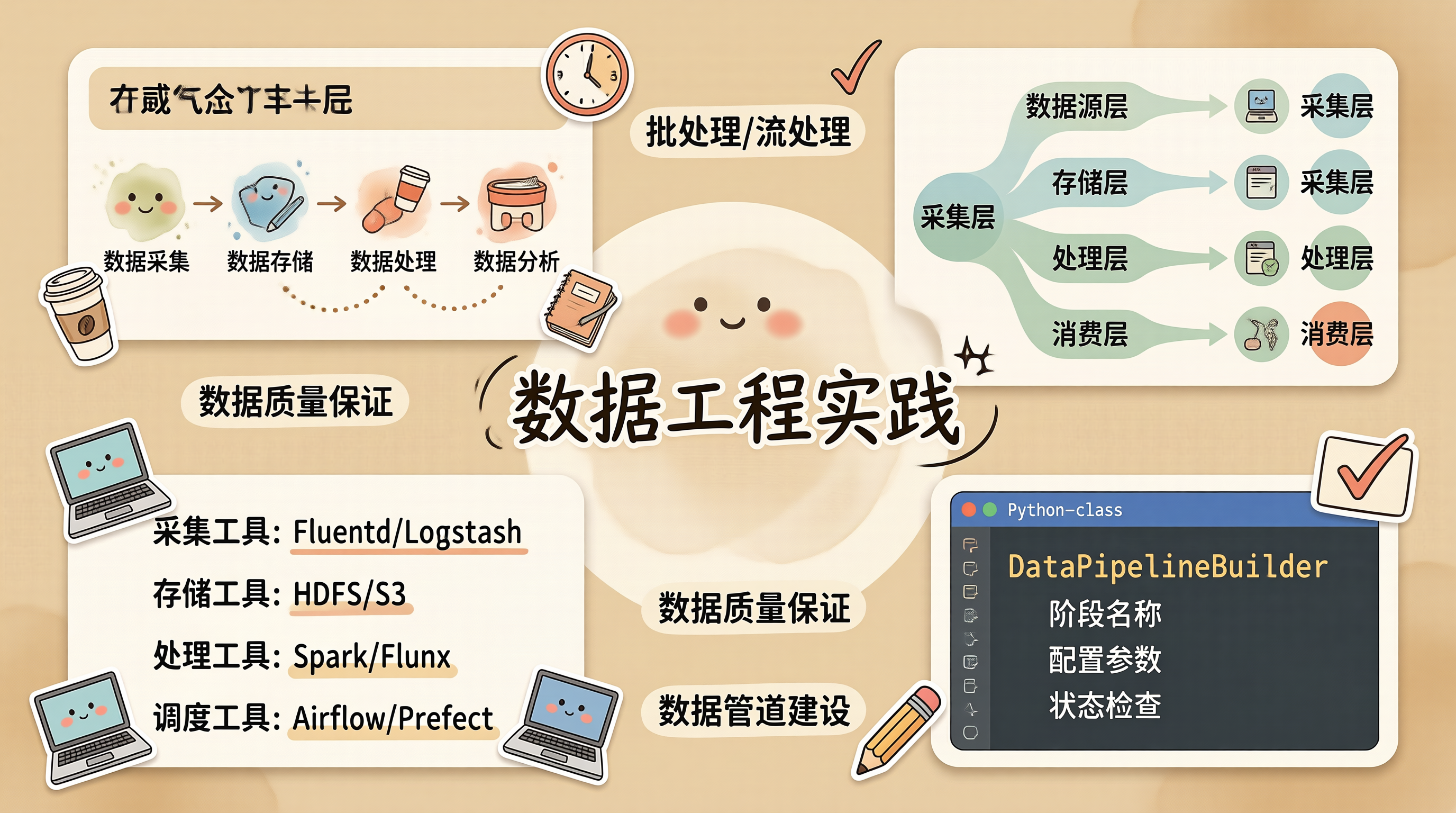
数据工程是设计、构建和维护数据系统的过程:
数据工程领域
数据采集: 从多源收集数据
数据存储: 存储和管理数据
数据处理: 清洗和转换数据
数据分析: 分析和挖掘数据
数据工程目标:
数据质量保证
数据管道建设
数据治理
数据价值挖掘
1.2 数据管道架构
数据管道层次
数据源层: 原始数据来源
采集层: 数据抽取
存储层: 数据仓库/湖
处理层: ETL/ELT
消费层: 分析和应用
管道类型:
批处理: 批量数据处理
流式处理: 实时数据处理
混合处理: 批流混合
1.3 数据工程工具
数据工程工具栈
采集工具: Fluentd、Logstash
存储工具: HDFS、S3、数据库
处理工具: Spark、Flink
调度工具: Airflow、Prefect
工具选择因素:
数据规模
实时性要求
处理复杂度
团队经验
2. 核心功能实现
2.1 数据管道构建器
class DataPipelineBuilder:
def __init__(self):
self.stages = []
def add_stage(self, name, stage_type, config):
self.stages.append({
'name': name,
'type': stage_type,
'config': config,
'status': 'pending'
})
def connect_stages(self):
for i in range(1, len(self.stages)):
self.stages[i]['config']['input_from'] = self.stages[i-1]['name']
def validate_pipeline(self):
errors = []
for stage in self.stages:
if 'input_from' in stage['config']:
source_stage = stage['config']['input_from']
if not any(s['name'] == source_stage for s in self.stages):
errors.append(f"Stage {stage['name']} has invalid input source")
return errors
def execute_pipeline(self):
for stage in self.stages:
print(f"Executing {stage['name']}…")
stage['status'] = 'completed'
return {'status': 'success', 'stages_executed': len(self.stages)}
2.2 数据质量检查器
class DataQualityChecker:
def __init__(self):
self.checks = []
def add_check(self, check_type, column, threshold=None):
self.checks.append({
'type': check_type,
'column': column,
'threshold': threshold,
'passed': None
})
def run_checks(self, data):
for check in self.checks:
result = self._run_check(check, data)
check['passed'] = result
return self.checks
def _run_check(self, check, data):
column_data = data[check['column']]
if check['type'] == 'not_null':
return column_data.notnull().all()
elif check['type'] == 'unique':
return column_data.nunique() == len(column_data)
elif check['type'] == 'range':
min_val, max_val = check['threshold']
return column_data.between(min_val, max_val).all()
elif check['type'] == 'pattern':
pattern = check['threshold']
return column_data.str.match(pattern).all()
return False
def generate_report(self):
passed = sum(1 for c in self.checks if c['passed'])
total = len(self.checks)
return {
'total_checks': total,
'passed_checks': passed,
'failed_checks': total – passed,
'percentage': (passed / total) * 100 if total > 0 else 0
}
2.3 数据仓库设计器
class DataWarehouseDesigner:
def __init__(self):
self.tables = {}
def create_table(self, table_name, columns):
self.tables[table_name] = {
'columns': columns,
'primary_key': None,
'foreign_keys': []
}
def set_primary_key(self, table_name, column):
if table_name in self.tables:
self.tables[table_name]['primary_key'] = column
def add_foreign_key(self, table_name, column, ref_table, ref_column):
if table_name in self.tables:
self.tables[table_name]['foreign_keys'].append({
'column': column,
'ref_table': ref_table,
'ref_column': ref_column
})
def generate_schema(self):
schema = []
for table_name, table_info in self.tables.items():
schema.append({
'table': table_name,
'columns': table_info['columns'],
'primary_key': table_info['primary_key'],
'foreign_keys': table_info['foreign_keys']
})
return schema
3. 性能对比
3.1 数据处理框架对比
| Spark | 高 | 中 | 中 |
| Flink | 中 | 高 | 中 |
| Dask | 中 | 低 | 高 |
3.2 数据存储对比
| HDFS | 高 | 中 | 中 |
| S3 | 极高 | 中 | 低 |
| 数据仓库 | 高 | 高 | 高 |
3.3 调度工具对比
| Airflow | 全面 | 中 | 高 |
| Prefect | 现代 | 高 | 中 |
| Luigi | 轻量 | 中 | 低 |
4. 最佳实践
4.1 数据管道构建
def data_pipeline_example():
builder = DataPipelineBuilder()
builder.add_stage('extract', 'source', {'source': 'database'})
builder.add_stage('transform', 'transform', {'operations': ['clean', 'enrich']})
builder.add_stage('load', 'sink', {'destination': 'warehouse'})
builder.connect_stages()
errors = builder.validate_pipeline()
print(f"Validation errors: {errors}")
result = builder.execute_pipeline()
print(f"Pipeline result: {result}")
4.2 数据质量检查
def data_quality_example():
checker = DataQualityChecker()
checker.add_check('not_null', 'user_id')
checker.add_check('unique', 'email')
checker.add_check('range', 'age', (18, 100))
import pandas as pd
data = pd.DataFrame({
'user_id': [1, 2, 3],
'email': ['a@test.com', 'b@test.com', 'c@test.com'],
'age': [25, 30, 35]
})
results = checker.run_checks(data)
print(f"Check results: {results}")
report = checker.generate_report()
print(f"Quality report: {report}")
5. 总结
数据工程是数据驱动决策的基础:
对比数据如下:
- Spark批处理最强
- Flink流处理最好
- Airflow调度最全面
- 推荐Spark+Flink组合
数据工程需要系统思维和工具链的掌握,通过实践不断优化数据系统。