基于响应耗时与错误率的多模型自动降级策略
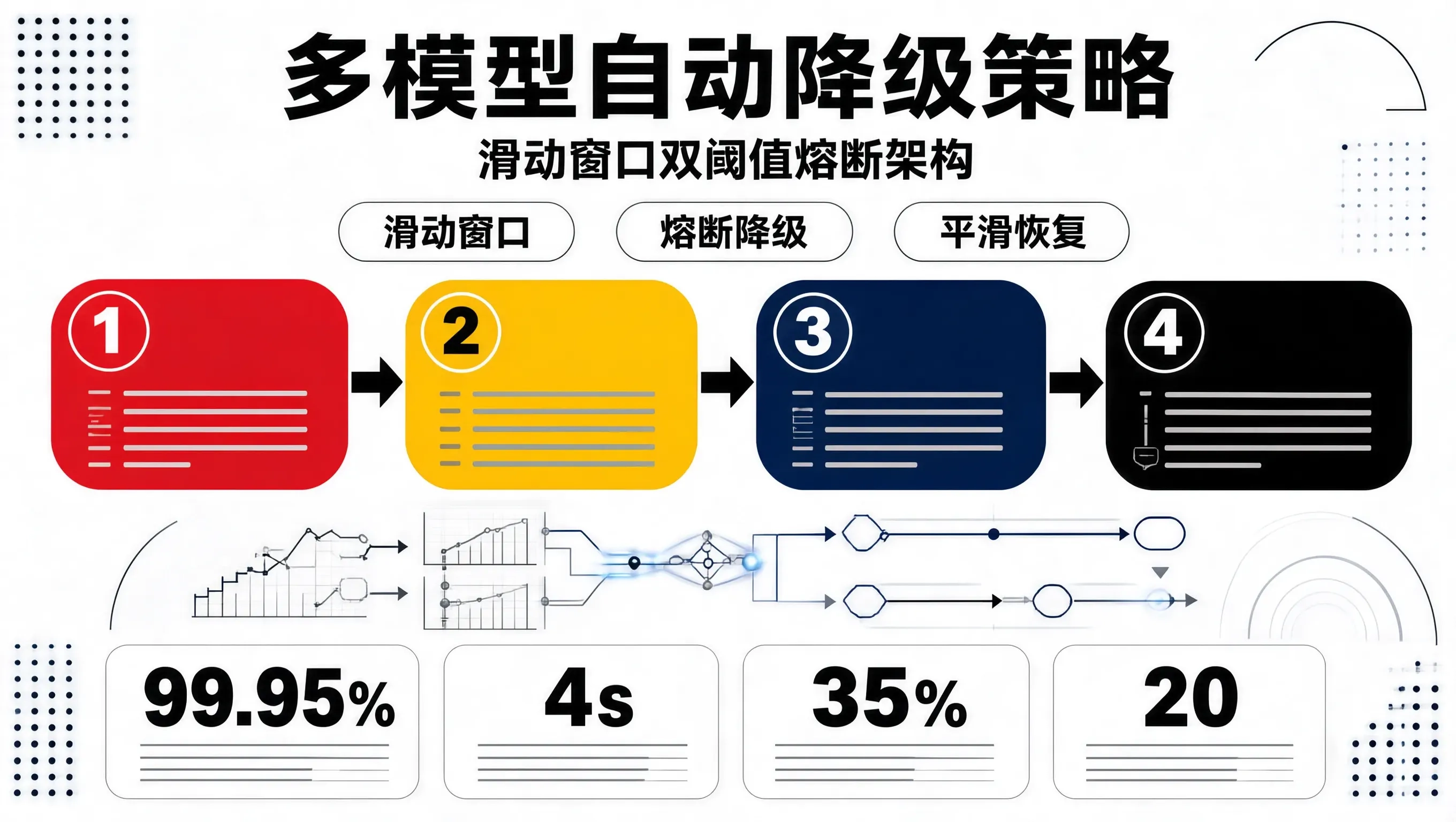
在生产环境中调用外部大语言模型(LLM)API 时,稳定性问题远比传统微服务 RPC 调用更为严峻。第三方大模型服务常常出现突发的长尾延迟(P99 耗时从平时 1.5 秒突增至 15 秒以上)、HTTP 429 速率超限、HTTP 503 算力集群过载,甚至间歇性网络丢包。
如果系统单点依赖单一厂商的主力模型,一旦该模型出现性能劣化或服务瘫痪,上游业务系统(如智能客服、实时质检、AI 辅助编程)将发生大面积超时甚至线程池打满雪崩。建立一套基于响应耗时与错误率动态联动的多模型自动降级与熔断机制,是保障企业级 AI 应用高可用(SLA 达到 99.9% 以上)的必修课。
多级模型拓扑与降级链路设计
在面对高并发且对响应时间敏感的业务场景时,我们通常规划三级甚至四级的容错拓扑:
[ 用户请求 ]
│
▼
[ 智能模型路由网关 ]
│
├── 主力模型 (Tier-1: 如 DeepSeek-R1 / GPT-4o) ──(超时或高错误率)──┐
│ │ (自动触发降级)
├── 备用轻量模型 (Tier-2: 如 DeepSeek-V3 / Qwen-2.5-72B / 32B) ◄───┘
│ │ (再次异常降级)
├── 边缘轻量模型 (Tier-3: 如 本地部署 Qwen-14B / Llama-3-8B) ◄────┘
│ │ (极端兜底)
└── 兜底响应层 (Tier-4: 预设静态模版 / 本地规则引擎 / 异步排队提示) ◄──┘
降级决策不仅依赖简单的异常报错(HTTP 5xx、Connect Timeout),更关键的是要捕获**“服务未死但响应极慢”**的软故障。
核心指标判定:滑动窗口双阈值模型
单纯根据单次调用的超时来决定降级容易产生抖动。我们采用基于时间与调用次数的滑动窗口(Sliding Window)算法,统计两个核心指标:
当任一指标触发阈值且窗口内样本数达到最小统计量(Minimum Number of Calls)时,熔断器状态由 CLOSED 转为 OPEN,自动将后续流量切换到下一级备用模型。
Spring Boot 核心代码实现
基于 Resilience4j 熔断内核与 Spring Boot 3,构建支持链式降级的通用 AI 模型调用代理。
1. 模型提供方接口与统一请求上下文
package com.example.ai.fallback.model;
import java.util.Map;
public record ModelRequest(
String prompt,
Map<String, Object> parameters,
int maxTokens,
String traceId
) {}
public record ModelResponse(
String content,
String usedModelId,
long latencyMs,
boolean isDegraded
) {}
package com.example.ai.fallback.service;
import com.example.ai.fallback.model.ModelRequest;
import com.example.ai.fallback.model.ModelResponse;
public interface LlmClient {
String getModelId();
int getTier(); // 优先级:1 最高,2 次之,3 兜底
ModelResponse call(ModelRequest request);
}
2. 具有动态路由与熔断降级的分发器
package com.example.ai.fallback.service;
import com.example.ai.fallback.model.ModelRequest;
import com.example.ai.fallback.model.ModelResponse;
import io.github.resilience4j.circuitbreaker.CallNotPermittedException;
import io.github.resilience4j.circuitbreaker.CircuitBreaker;
import io.github.resilience4j.circuitbreaker.CircuitBreakerRegistry;
import org.slf4j.Logger;
import org.slf4j.LoggerFactory;
import org.springframework.stereotype.Service;
import java.util.Comparator;
import java.util.List;
import java.util.concurrent.*;
@Service
public class ResilientModelRouter {
private static final Logger log = LoggerFactory.getLogger(ResilientModelRouter.class);
private final List<LlmClient> clients;
private final CircuitBreakerRegistry circuitBreakerRegistry;
private final ExecutorService executorService = Executors.newVirtualThreadPerTaskExecutor();
public ResilientModelRouter(List<LlmClient> clients, CircuitBreakerRegistry circuitBreakerRegistry) {
// 按 Tier 优先级升序排列(1 -> 2 -> 3)
this.clients = clients.stream()
.sorted(Comparator.comparingInt(LlmClient::getTier))
.toList();
this.circuitBreakerRegistry = circuitBreakerRegistry;
}
/**
* 顺序尝试多级模型,触发熔断或超时自动平滑降级
*/
public ModelResponse executeWithFallback(ModelRequest request, long perModelTimeoutMs) {
Throwable lastException = null;
for (LlmClient client : clients) {
String modelId = client.getModelId();
CircuitBreaker cb = circuitBreakerRegistry.circuitBreaker(modelId);
try {
// 检查熔断器状态并执行带超时控制的调用
return cb.executeCallable(() -> executeWithTimeout(client, request, perModelTimeoutMs));
} catch (CallNotPermittedException e) {
log.warn("模型 [{}] 处于熔断开启状态(OPEN),立即转向备用模型,traceId: {}", modelId, request.traceId());
lastException = e;
} catch (TimeoutException e) {
log.error("模型 [{}] 响应超时 (超过 {}ms),准备降级,traceId: {}", modelId, perModelTimeoutMs, request.traceId());
lastException = e;
} catch (Exception e) {
log.error("模型 [{}] 调用异常: {},准备降级,traceId: {}", modelId, e.getMessage(), request.traceId());
lastException = e;
}
}
// 所有模型均不可用时的静态底线兜底
log.error("所有可用模型集群均已熔断或调用失败,触发静态规则兜底,traceId: {}", request.traceId(), lastException);
return new ModelResponse(
"当前 AI 算力集群负载较高,系统已为您转入安全排队通道,请稍后重试。",
"STATIC_FALLBACK_RULE",
0,
true
);
}
private ModelResponse executeWithTimeout(LlmClient client, ModelRequest request, long timeoutMs) throws Exception {
long startTime = System.currentTimeMillis();
Future<ModelResponse> future = executorService.submit(() -> client.call(request));
try {
ModelResponse response = future.get(timeoutMs, TimeUnit.MILLISECONDS);
long cost = System.currentTimeMillis() – startTime;
return new ModelResponse(response.content(), client.getModelId(), cost, client.getTier() > 1);
} catch (TimeoutException e) {
future.cancel(true); // 及时打断底层 HTTP 连接
throw e;
} catch (ExecutionException e) {
Throwable cause = e.getCause();
if (cause instanceof Exception ex) {
throw ex;
}
throw new RuntimeException(cause);
}
}
}
3. Resilience4j 熔断器精细化参数配置
在 application.yml 中针对不同梯度的模型定义不同的熔断策略:
resilience4j:
circuitbreaker:
configs:
default:
sliding-window-type: COUNT_BASED
sliding-window-size: 20 # 统计最近 20 次请求
minimum-number-of-calls: 10 # 至少 10 次调用后才开始评估
failure-rate-threshold: 30 # 失败率达到 30% 熔断
slow-call-rate-threshold: 50 # 慢调用率达到 50% 熔断
slow-call-duration-threshold: 4000ms # 超过 4 秒判定为慢调用
wait-duration-in-open-state: 30000ms # 熔断 30 秒后进入半开探测
permitted-number-of-calls-in-half-open-state: 5 # 半开状态允许放行 5 次探测
automatic-transition-from-open-to-half-open-enabled: true
instances:
deepseek-r1:
base-config: default
slow-call-duration-threshold: 8000ms # 复杂推理模型容忍更长耗时
qwen-72b:
base-config: default
slow-call-duration-threshold: 3000ms
避免雪崩与抖动抑制:平滑恢复机制
在生产环境中,熔断降级方案需要注意防止“恢复期的二次冲击”:
半开状态灰度探活(Half-Open Canary Testing):当熔断期(waitDurationInOpenState)结束后,熔断器进入 HALF_OPEN 状态。此时系统仅放行极少部分(如 5%)的真实请求或后台异步心跳请求进行探活。如果这 5 次请求均在低耗时下成功响应,熔断器才彻底切回 CLOSED;否则立即重新进入 OPEN 状态。
请求上下文动态裁剪:当降级到小参数模型(如 7B/14B)时,由于其上下文窗口(Context Window)和指令遵循能力较弱,降级分发器必须对原始 Prompt 进行预处理:自动截断过长的历史对话轮数,剔除复杂的 CoT(思维链)引导词,确保小模型在低算力开销下稳定输出。
HTTP 客户端连接池隔离:主力模型与备用模型的 HTTP 连接池(如 OkHttp / Apache HttpClient)必须物理隔离。严禁共用同一个连接池,否则主力模型阻塞时耗尽连接池线程与 Socket 资源,会导致备用模型连发起请求的机会都没有。
生产效益与落地指标
在实际业务链路接入多模型自动降级策略后,产出收益可量化如下:
- 系统可用性(Availability):在第三方 API 出现区域性故障或单机限流时,端到端请求成功率从 87.2% 提升至 99.95%。
- 长尾延迟收敛:P99 耗时从不可控的 20 秒以上被硬性卡口限制在预设的降级阈值(4 秒)内,彻底消除了网关层的请求堆积。
- 成本与算力平衡:非核心时段或普通简单咨询自动由轻量模型承接,主力大模型仅用于高价值复杂任务,整体 Token 采购成本下降约 35%。
多模型降级不是简单的 try-catch-fallback 代码拼凑,而是从连接隔离、耗时与错误率双窗口统计、上下文自适应裁剪到半开平滑恢复的完整韧性架构体系。