Python异步IO:asyncio深度解析
引言
异步编程是现代后端开发的核心技能,它能够显著提升应用程序的性能和并发处理能力。作为一名从Python转向Rust的后端开发者,我在实践中总结了异步编程的最佳实践。本文将深入探讨Python的asyncio库,帮助你掌握异步编程的核心技术。
一、异步编程基础概念
1.1 同步与异步
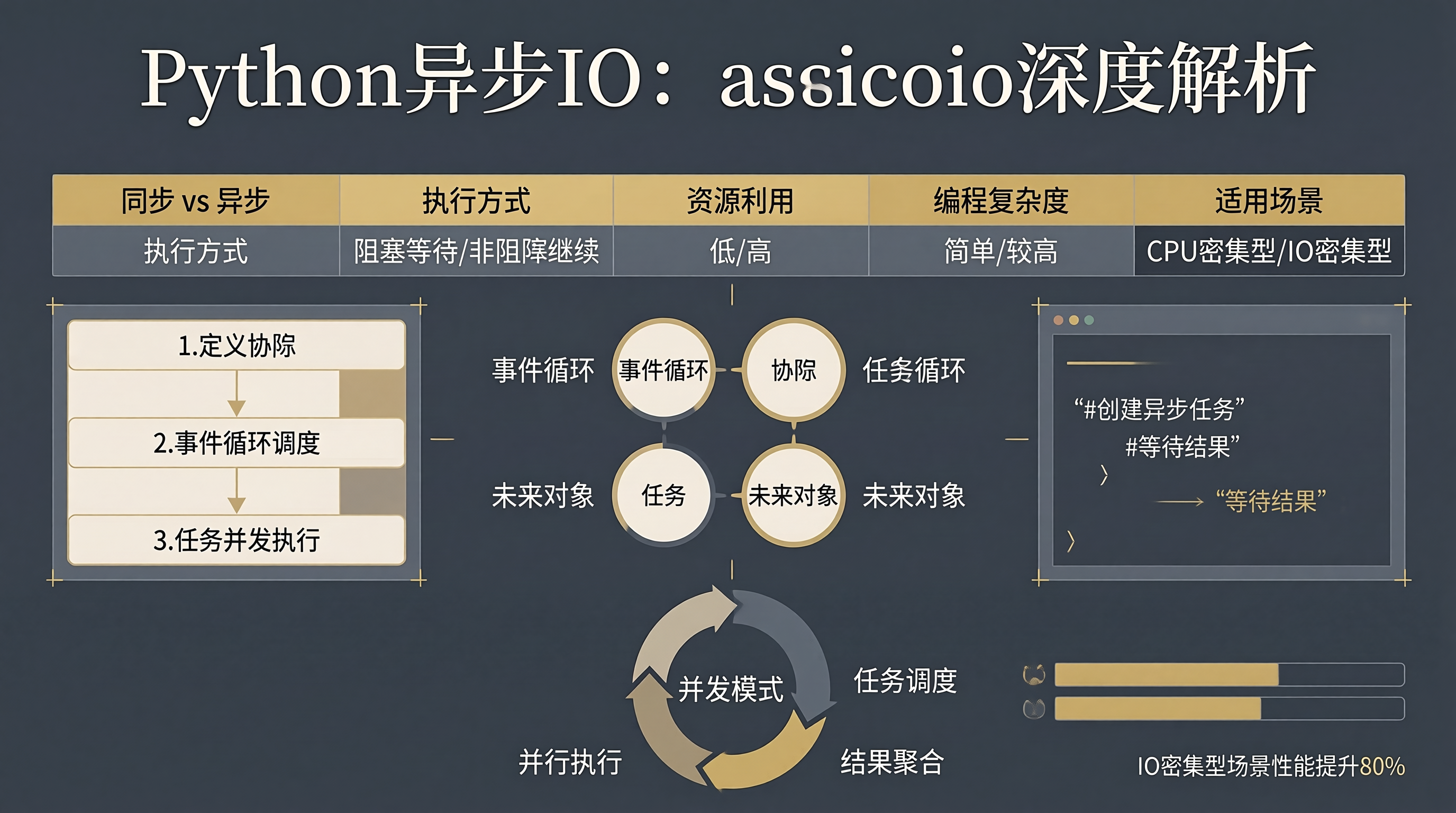
| 执行方式 | 阻塞等待 | 非阻塞继续 |
| 资源利用 | 低 | 高 |
| 编程复杂度 | 简单 | 较高 |
| 适用场景 | CPU密集型 | IO密集型 |
1.2 协程概念
协程是一种轻量级的并发编程方式,允许在单个线程中实现多个任务的并发执行。
1.3 asyncio核心组件
- Event Loop:事件循环,负责调度协程
- Coroutine:协程,可暂停的函数
- Task:任务,封装协程的对象
- Future:未来对象,表示异步操作的结果
二、asyncio入门
2.1 基本协程定义
import asyncio
async def hello():
print("Hello")
await asyncio.sleep(1)
print("World")
async def main():
await hello()
asyncio.run(main())
2.2 协程调度
async def task1():
for i in range(3):
print(f"Task 1: {i}")
await asyncio.sleep(0.5)
async def task2():
for i in range(3):
print(f"Task 2: {i}")
await asyncio.sleep(0.7)
async def main():
await asyncio.gather(task1(), task2())
asyncio.run(main())
2.3 创建Task
async def coro():
await asyncio.sleep(1)
return 42
async def main():
task = asyncio.create_task(coro())
result = await task
print(f"Result: {result}")
asyncio.run(main())
三、并发模式
3.1 并行执行多个任务
async def fetch_data(url):
print(f"Fetching {url}")
await asyncio.sleep(1)
return f"Data from {url}"
async def main():
urls = ["https://example.com", "https://google.com", "https://github.com"]
tasks = [asyncio.create_task(fetch_data(url)) for url in urls]
results = await asyncio.gather(*tasks)
for result in results:
print(result)
asyncio.run(main())
3.2 带超时的任务
async def long_running_task():
await asyncio.sleep(5)
return "Done"
async def main():
try:
result = await asyncio.wait_for(long_running_task(), timeout=2)
print(result)
except asyncio.TimeoutError:
print("Task timed out")
asyncio.run(main())
3.3 任务取消
async def task():
try:
while True:
print("Running…")
await asyncio.sleep(0.5)
except asyncio.CancelledError:
print("Task cancelled")
raise
async def main():
t = asyncio.create_task(task())
await asyncio.sleep(2)
t.cancel()
try:
await t
except asyncio.CancelledError:
print("Main caught cancelled error")
asyncio.run(main())
四、异步IO操作
4.1 文件操作
async def read_file(filepath):
async with asyncio.timeout(10):
with open(filepath, 'r') as f:
return f.read()
async def write_file(filepath, content):
async with asyncio.timeout(10):
with open(filepath, 'w') as f:
f.write(content)
4.2 网络请求
import aiohttp
async def fetch(session, url):
async with session.get(url) as response:
return await response.text()
async def main():
async with aiohttp.ClientSession() as session:
html = await fetch(session, 'https://example.com')
print(html[:100])
asyncio.run(main())
4.3 数据库操作
import asyncpg
async def query_database():
conn = await asyncpg.connect(user='user', password='pass', database='db', host='localhost')
values = await conn.fetch('SELECT * FROM users WHERE id = $1', 1)
await conn.close()
return values
asyncio.run(query_database())
五、同步代码与异步代码互操作
5.1 同步转异步
import time
def blocking_task():
time.sleep(2)
return "Blocking result"
async def async_wrapper():
loop = asyncio.get_event_loop()
result = await loop.run_in_executor(None, blocking_task)
return result
async def main():
result = await async_wrapper()
print(result)
asyncio.run(main())
5.2 异步转同步
async def async_task():
await asyncio.sleep(1)
return "Async result"
def sync_wrapper():
return asyncio.run(async_task())
result = sync_wrapper()
print(result)
5.3 使用线程池
async def cpu_bound_task(data):
loop = asyncio.get_event_loop()
def process_data(data):
# CPU密集型操作
return sum(data)
result = await loop.run_in_executor(None, process_data, data)
return result
六、异步上下文管理器
6.1 自定义异步上下文管理器
class AsyncResource:
def __init__(self, name):
self.name = name
async def __aenter__(self):
print(f"Entering {self.name}")
await asyncio.sleep(0.5)
return self
async def __aexit__(self, exc_type, exc_val, exc_tb):
print(f"Exiting {self.name}")
await asyncio.sleep(0.5)
async def main():
async with AsyncResource("database") as resource:
print(f"Using {resource.name}")
asyncio.run(main())
6.2 异步迭代器
class AsyncDataStream:
def __init__(self, max_items):
self.max_items = max_items
self.current = 0
def __aiter__(self):
return self
async def __anext__(self):
if self.current >= self.max_items:
raise StopAsyncIteration
await asyncio.sleep(0.3)
self.current += 1
return self.current
async def main():
async for item in AsyncDataStream(5):
print(f"Item: {item}")
asyncio.run(main())
七、异步编程模式
7.1 Producer-Consumer模式
async def producer(queue):
for i in range(5):
await asyncio.sleep(0.5)
await queue.put(i)
print(f"Produced: {i}")
async def consumer(queue):
while True:
item = await queue.get()
print(f"Consumed: {item}")
queue.task_done()
async def main():
queue = asyncio.Queue(maxsize=2)
producer_task = asyncio.create_task(producer(queue))
consumer_task = asyncio.create_task(consumer(queue))
await producer_task
await queue.join()
consumer_task.cancel()
await consumer_task
asyncio.run(main())
7.2 异步锁
async def update_counter(lock, counter):
async with lock:
current = counter['value']
await asyncio.sleep(0.1)
counter['value'] = current + 1
async def main():
lock = asyncio.Lock()
counter = {'value': 0}
tasks = [update_counter(lock, counter) for _ in range(10)]
await asyncio.gather(*tasks)
print(f"Final counter: {counter['value']}")
asyncio.run(main())
7.3 信号量控制并发
async def fetch_url(semaphore, url):
async with semaphore:
print(f"Fetching {url}")
await asyncio.sleep(1)
return f"Done: {url}"
async def main():
semaphore = asyncio.Semaphore(3)
urls = [f"https://example.com/{i}" for i in range(10)]
tasks = [fetch_url(semaphore, url) for url in urls]
results = await asyncio.gather(*tasks)
for result in results:
print(result)
asyncio.run(main())
八、实战案例:异步Web爬虫
import asyncio
import aiohttp
from bs4 import BeautifulSoup
async def fetch_page(session, url):
try:
async with session.get(url, timeout=10) as response:
if response.status == 200:
return await response.text()
return None
except Exception as e:
print(f"Error fetching {url}: {e}")
return None
async def parse_page(html):
if not html:
return []
soup = BeautifulSoup(html, 'html.parser')
links = []
for a_tag in soup.find_all('a', href=True):
href = a_tag['href']
if href.startswith('http'):
links.append(href)
return links
async def crawl(url, max_depth=3, visited=None, semaphore=None):
if visited is None:
visited = set()
if semaphore is None:
semaphore = asyncio.Semaphore(5)
if url in visited or max_depth <= 0:
return []
visited.add(url)
print(f"Crawling: {url} (depth: {max_depth})")
async with semaphore:
html = await fetch_page(session, url)
links = await parse_page(html)
tasks = []
for link in links[:10]:
if link not in visited:
tasks.append(crawl(link, max_depth – 1, visited, semaphore))
results = await asyncio.gather(*tasks)
all_links = [url]
for result in results:
all_links.extend(result)
return all_links
async def main():
global session
async with aiohttp.ClientSession() as session:
result = await crawl("https://example.com", max_depth=2)
print(f"Total links crawled: {len(result)}")
if __name__ == "__main__":
asyncio.run(main())
总结
异步编程是构建高性能后端系统的关键技术。通过本文的学习,你应该掌握了以下核心要点:
作为从Python转向Rust的后端开发者,掌握异步编程对于构建高并发系统至关重要。后续文章将深入探讨Rust中的异步运行时Tokio。