WechatSogou微信公众号爬虫深度解析:Python数据采集技术指南
【免费下载链接】WechatSogou 基于搜狗微信搜索的微信公众号爬虫接口  项目地址: https://gitcode.com/gh_mirrors/we/WechatSogou
在当今数据驱动的时代,微信公众号已成为企业和个人获取信息、传播内容的重要平台。然而,如何高效地从微信生态中提取结构化数据,一直是开发者面临的技术挑战。WechatSogou作为基于搜狗微信搜索的Python爬虫接口,为开发者提供了一个稳定、全面的微信公众号数据采集解决方案。本文将深入剖析该工具的技术架构、核心功能和使用方法,帮助您掌握微信公众号数据采集的关键技术。
技术架构与工作原理
底层设计原理
WechatSogou的核心设计基于对搜狗微信搜索接口的逆向工程和封装。搜狗作为微信内容的官方搜索引擎,提供了相对稳定的数据接口,这为微信公众号数据采集提供了可靠的基础。该工具通过模拟浏览器请求、处理验证码、解析HTML结构等技术手段,将复杂的网页数据转化为结构化的Python对象。
架构分层设计:
 图1:WechatSogou API调用示例,展示公众号信息获取功能
核心模块解析
项目的主要模块分布在wechatsogou/目录下,每个模块都有明确的职责:
- api.py:主API接口,提供所有公开方法的实现
- const.py:常量定义,包括搜索类型、时间范围、热门分类等配置
- request.py:HTTP请求处理,封装了网络请求的底层逻辑
- structuring.py:数据结构解析,负责将HTML转换为结构化数据
- identify_image.py:验证码识别处理,支持手动和自动识别
- exceptions.py:自定义异常类,提供清晰的错误处理机制
- filecache.py:文件缓存管理,提高重复请求的效率
环境配置与基础使用
安装与初始化
WechatSogou支持Python 2.7和Python 3.5+版本,安装过程非常简单:
# 使用pip安装最新版本
pip install wechatsogou –upgrade
# 或者从源码安装
git clone https://gitcode.com/gh_mirrors/we/WechatSogou
cd WechatSogou
python setup.py install
初始化API时,您可以根据需要配置不同的参数:
import wechatsogou
# 基础初始化 – 最简单的使用方式
api = wechatsogou.WechatSogouAPI()
# 配置验证码重试次数 – 推荐生产环境使用
api = wechatsogou.WechatSogouAPI(captcha_break_time=3)
# 配置代理服务器 – 防止IP被封
api = wechatsogou.WechatSogouAPI(
proxies={
"http": "http://your-proxy:8080",
"https": "http://your-proxy:8080",
},
timeout=10 # 设置请求超时时间
)
# 自定义请求头
api = wechatsogou.WechatSogouAPI(
headers={
'User-Agent': 'Mozilla/5.0 (Windows NT 10.0; Win64; x64) AppleWebKit/537.36',
'Accept-Language': 'zh-CN,zh;q=0.9,en;q=0.8',
}
)
验证码处理机制
WechatSogou内置了验证码处理机制,当遇到验证码时,工具会提供多种处理方式:
# 方式1:自动重试(默认)
api = wechatsogou.WechatSogouAPI(captcha_break_time=3)
# 方式2:自定义验证码识别回调
def custom_captcha_handler(image_data):
# 这里可以实现自己的验证码识别逻辑
# 例如调用第三方验证码识别服务
captcha_text = recognize_captcha(image_data)
return captcha_text
# 在具体API调用时传入回调函数
results = api.search_gzh('关键词', identify_image_callback=custom_captcha_handler)
核心功能详解
公众号信息获取
获取特定公众号的详细信息是数据采集的基础操作。WechatSogou提供了get_gzh_info()方法,可以获取公众号的完整元数据:
# 获取公众号详细信息
gzh_info = api.get_gzh_info('南航青年志愿者')
# 解析返回的数据结构
print(f"公众号名称: {gzh_info['wechat_name']}")
print(f"微信号: {gzh_info['wechat_id']}")
print(f"认证信息: {gzh_info['authentication']}")
print(f"简介: {gzh_info['introduction']}")
print(f"最近一月发文数: {gzh_info['post_perm']}")
print(f"最近一月阅读量: {gzh_info['view_perm']}")
print(f"头像链接: {gzh_info['headimage']}")
print(f"二维码链接: {gzh_info['qrcode']}")
print(f"最近文章页链接: {gzh_info['profile_url']}")
返回数据结构说明:
{
'profile_url': 'http://mp.weixin.qq.com/profile?…', # 最近10条群发页链接
'headimage': 'http://img01.sogoucdn.com/app/a/…', # 头像URL
'wechat_name': '公众号名称', # 公众号名称
'wechat_id': '微信号', # 微信ID
'post_perm': 26, # 最近一月群发数
'view_perm': 1000, # 最近一月阅读量
'qrcode': 'http://mp.weixin.qq.com/rr?…', # 二维码链接
'introduction': '公众号简介…', # 简介
'authentication': '认证信息' # 认证信息
}
 图2:公众号搜索结果展示,支持多条件筛选和分页处理
多维度公众号搜索
根据关键词批量搜索相关公众号是进行竞品分析和行业研究的重要功能:
from wechatsogou import WechatSogouAPI
# 搜索相关公众号
search_results = api.search_gzh('Python编程')
# 处理搜索结果
for idx, gzh in enumerate(search_results[:10], 1):
print(f"{idx}. {gzh['wechat_name']} ({gzh['wechat_id']})")
print(f" 认证: {gzh['authentication']}")
print(f" 简介: {gzh['introduction']}")
print(f" 发文数: {gzh['post_perm']}, 阅读量: {gzh['view_perm']}")
print("-" * 50)
# 搜索结果统计
print(f"共找到 {len(search_results)} 个相关公众号")
搜索算法优化:
- 支持模糊匹配和精确匹配
- 自动处理分页逻辑
- 内置去重机制
- 支持验证码自动重试
文章内容智能检索
跨公众号搜索文章内容,支持多种筛选条件和排序方式:
from wechatsogou import WechatSogouConst
# 搜索最近一周的原创文章
articles = api.search_article(
'机器学习',
timesn=WechatSogouConst.search_article_time.week, # 时间范围:一周内
article_type=WechatSogouConst.search_article_type.original # 文章类型:原创
)
# 分析搜索结果
for article in articles:
print(f"标题: {article['article']['title']}")
print(f"发布时间: {article['article']['time']}")
print(f"来源公众号: {article['gzh']['wechat_name']}")
print(f"文章链接: {article['article']['url']}")
print(f"摘要: {article['article']['abstract'][:100]}…") # 显示前100字符
print(f"封面图: {article['article']['imgs'][0] if article['article']['imgs'] else '无'}")
print("=" * 80)
搜索参数详解:
| timesn | WechatSogouConst.search_article_time | 时间范围:anytime/day/week/month/year/specific |
| article_type | WechatSogouConst.search_article_type | 文章类型:all/rich/video/image |
| page | 整数 | 分页参数,默认为1 |
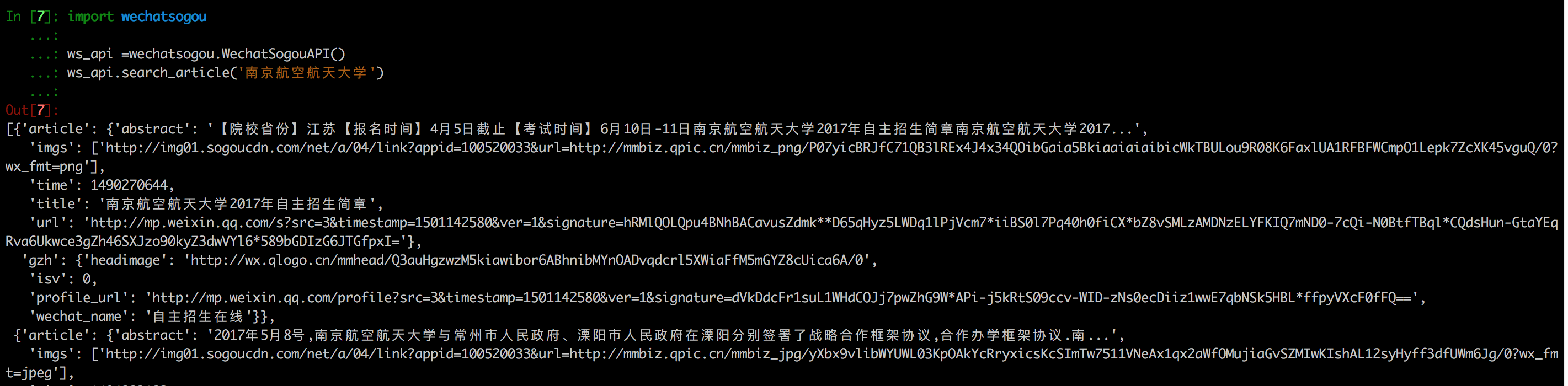 图3:文章搜索结果展示,支持多维度筛选和排序
历史文章获取与分析
获取指定公众号的历史文章列表,支持时间范围和数量限制:
# 获取公众号历史文章
history_data = api.get_gzh_article_by_history('南航青年志愿者')
# 解析返回数据
gzh_info = history_data['gzh']
articles = history_data['article']
print(f"公众号: {gzh_info['wechat_name']} ({gzh_info['wechat_id']})")
print(f"简介: {gzh_info['introduction']}")
print(f"认证: {gzh_info['authentication']}")
print(f"共获取 {len(articles)} 篇文章")
# 分析文章数据
for article in articles:
from datetime import datetime
pub_time = datetime.fromtimestamp(article['datetime'])
print(f"- {article['title']}")
print(f" 发布时间: {pub_time.strftime('%Y-%m-%d %H:%M:%S')}")
print(f" 阅读原文链接: {article['source_url'] or '无'}")
print(f" 封面图: {article['cover']}")
print(f" 作者: {article['author'] or '未标注'}")
print(f" 版权状态: {article['copyright_stat']}")
历史文章数据结构:
{
'gzh': {
'wechat_name': '公众号名称',
'wechat_id': '微信号',
'introduction': '简介',
'authentication': '认证信息',
'headimage': '头像URL'
},
'article': [
{
'send_id': 1000000306, # 群发ID
'datetime': 1501072594, # 发布时间戳
'type': '49', # 消息类型
'main': 1, # 是否主文章
'title': '文章标题',
'abstract': '文章摘要',
'fileid': 502326199, # 文件ID
'content_url': '文章链接',
'source_url': '阅读原文链接',
'cover': '封面图URL',
'author': '作者',
'copyright_stat': 100 # 版权状态
},
# … 更多文章
]
}
 图4:公众号历史文章数据展示,包含详细的文章元信息
热门内容发现机制
按分类获取热门文章,支持多种内容分类:
from wechatsogou import WechatSogouConst
# 获取不同分类的热门文章
categories = [
(WechatSogouConst.hot_index.technology, "科技"),
(WechatSogouConst.hot_index.finance, "财经"),
(WechatSogouConst.hot_index.food, "美食"),
(WechatSogouConst.hot_index.travel, "旅行")
]
for category, name in categories:
print(f"\\n=== {name}分类热门文章 ===")
hot_articles = api.get_gzh_article_by_hot(category)
for article in hot_articles[:5]: # 显示前5篇
print(f"标题: {article['article']['title']}")
print(f"公众号: {article['gzh']['wechat_name']}")
print(f"摘要: {article['article']['abstract'][:80]}…")
print(f"链接: {article['article']['url']}")
print("-" * 60)
支持的热门分类:
- hot_index.technology – 科技
- hot_index.finance – 财经
- hot_index.food – 美食
- hot_index.travel – 旅行
- hot_index.fashion – 时尚
- hot_index.health – 养生
- hot_index.study – 教育
- 等18个分类
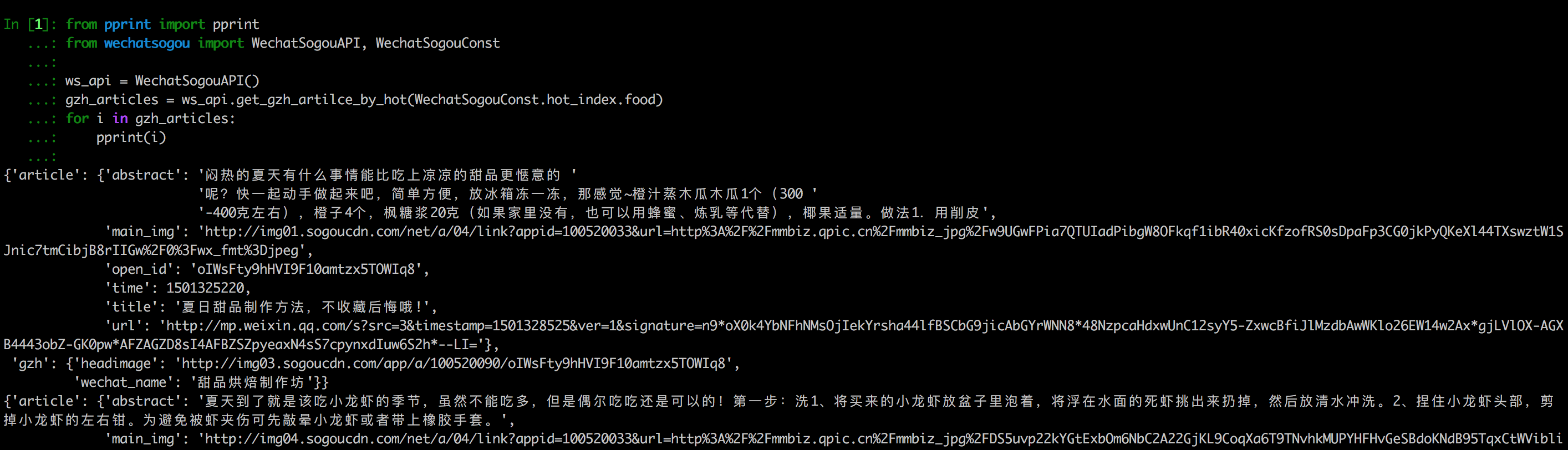 图5:热门文章分类展示,支持多种内容领域
搜索关键词智能联想
获取搜索关键词的相关建议,优化搜索策略:
# 获取关键词联想建议
keywords = ['Python', '机器学习', '数据分析', '人工智能']
for keyword in keywords:
suggestions = api.get_sugg(keyword)
print(f"\\n关键词 '{keyword}' 的联想建议:")
for i, sugg in enumerate(suggestions[:5], 1):
print(f" {i}. {sugg}")
# 使用联想词进行深度搜索
if suggestions:
related_articles = api.search_article(suggestions[0])
print(f" 相关文章数量: {len(related_articles)}")
应用场景:
- 搜索引擎优化(SEO)关键词研究
- 内容策略规划
- 用户搜索行为分析
- 自动补全功能开发
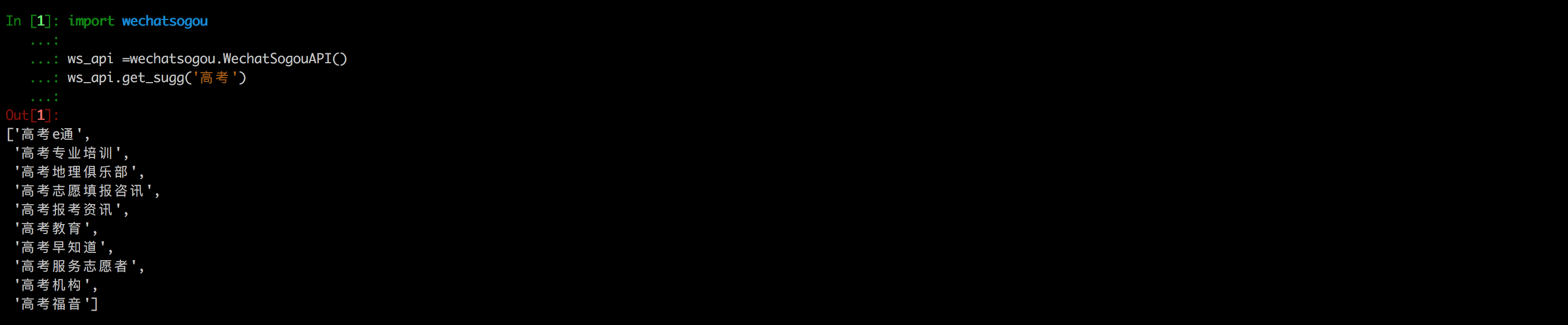 图6:搜索关键词联想功能展示,提供相关搜索建议
高级配置与性能优化
请求频率控制策略
为了防止IP被封和提高采集效率,需要合理控制请求频率:
import time
from functools import wraps
from random import uniform
def rate_limiter(func):
"""请求频率限制装饰器"""
@wraps(func)
def wrapper(*args, **kwargs):
# 添加随机延迟,模拟人类操作
time.sleep(uniform(1, 3))
return func(*args, **kwargs)
return wrapper
class OptimizedWechatAPI:
def __init__(self, api_instance):
self.api = api_instance
self.request_count = 0
self.last_request_time = time.time()
@rate_limiter
def safe_search_gzh(self, keyword):
"""安全的公众号搜索"""
self.request_count += 1
return self.api.search_gzh(keyword)
def batch_search(self, keywords, batch_size=5):
"""批量搜索,控制并发"""
results = {}
for i, keyword in enumerate(keywords):
if i > 0 and i % batch_size == 0:
print(f"已处理 {i} 个关键词,等待10秒继续…")
time.sleep(10)
try:
results[keyword] = self.safe_search_gzh(keyword)
except Exception as e:
print(f"搜索关键词 '{keyword}' 失败: {e}")
results[keyword] = []
return results
数据缓存与持久化
为了提高效率和避免重复请求,建议实现数据缓存机制:
import json
import hashlib
import os
from datetime import datetime, timedelta
class DataCacheManager:
def __init__(self, cache_dir='./cache', ttl_hours=24):
"""初始化缓存管理器
Args:
cache_dir: 缓存目录路径
ttl_hours: 缓存有效期(小时)
"""
self.cache_dir = cache_dir
self.ttl = timedelta(hours=ttl_hours)
os.makedirs(cache_dir, exist_ok=True)
def _get_cache_key(self, func_name, *args, **kwargs):
"""生成缓存键"""
key_data = f"{func_name}_{str(args)}_{str(kwargs)}"
return hashlib.md5(key_data.encode()).hexdigest()
def _get_cache_path(self, cache_key):
"""获取缓存文件路径"""
return os.path.join(self.cache_dir, f"{cache_key}.json")
def get_cached_data(self, func_name, *args, **kwargs):
"""获取缓存数据"""
cache_key = self._get_cache_key(func_name, *args, **kwargs)
cache_path = self._get_cache_path(cache_key)
if os.path.exists(cache_path):
# 检查缓存是否过期
mtime = datetime.fromtimestamp(os.path.getmtime(cache_path))
if datetime.now() – mtime < self.ttl:
with open(cache_path, 'r', encoding='utf-8') as f:
return json.load(f)
return None
def save_cache_data(self, func_name, data, *args, **kwargs):
"""保存缓存数据"""
cache_key = self._get_cache_key(func_name, *args, **kwargs)
cache_path = self._get_cache_path(cache_key)
with open(cache_path, 'w', encoding='utf-8') as f:
json.dump(data, f, ensure_ascii=False, indent=2)
return cache_path
# 使用示例
cache_manager = DataCacheManager()
def cached_search_gzh(api, keyword):
"""带缓存的公众号搜索"""
cache_key = f"search_gzh_{keyword}"
cached_data = cache_manager.get_cached_data('search_gzh', keyword)
if cached_data:
print(f"从缓存加载数据: {keyword}")
return cached_data
# 调用API获取数据
data = api.search_gzh(keyword)
# 保存到缓存
cache_manager.save_cache_data('search_gzh', data, keyword)
print(f"缓存新数据: {keyword}")
return data
错误处理与重试机制
健壮的错误处理是生产环境应用的关键:
import logging
from tenacity import retry, stop_after_attempt, wait_exponential, retry_if_exception_type
from wechatsogou.exceptions import WechatSogouException
# 配置日志
logging.basicConfig(
level=logging.INFO,
format='%(asctime)s – %(name)s – %(levelname)s – %(message)s'
)
logger = logging.getLogger(__name__)
class RobustWechatAPI:
def __init__(self, api_instance, max_retries=3):
self.api = api_instance
self.max_retries = max_retries
@retry(
stop=stop_after_attempt(3),
wait=wait_exponential(multiplier=1, min=4, max=10),
retry=retry_if_exception_type((WechatSogouException, ConnectionError))
)
def robust_search(self, keyword):
"""带有重试机制的搜索"""
try:
return self.api.search_gzh(keyword)
except WechatSogouException as e:
logger.warning(f"搜索失败: {e}, 等待重试…")
raise
except Exception as e:
logger.error(f"未知错误: {e}")
raise
def safe_get_gzh_info(self, gzh_name):
"""安全的公众号信息获取"""
for attempt in range(self.max_retries):
try:
return self.api.get_gzh_info(gzh_name)
except WechatSogouException as e:
if "验证码" in str(e) and attempt < self.max_retries – 1:
logger.info(f"第{attempt + 1}次尝试失败,等待5秒后重试…")
time.sleep(5)
else:
raise
except Exception as e:
logger.error(f"获取公众号信息失败: {e}")
return None
return None
实际应用场景
场景一:竞品监控系统
import schedule
import time
from datetime import datetime
import pandas as pd
class CompetitorMonitor:
def __init__(self, api, competitors):
self.api = api
self.competitors = competitors
self.monitor_data = []
def monitor_single_competitor(self, competitor_name):
"""监控单个竞品公众号"""
try:
# 获取公众号信息
gzh_info = self.api.get_gzh_info(competitor_name)
# 获取最新文章
history_data = self.api.get_gzh_article_by_history(competitor_name)
if history_data and history_data.get('article'):
latest_article = history_data['article'][0]
record = {
'timestamp': datetime.now(),
'competitor': competitor_name,
'wechat_id': gzh_info.get('wechat_id', ''),
'post_count': gzh_info.get('post_perm', 0),
'view_count': gzh_info.get('view_perm', 0),
'latest_title': latest_article.get('title', ''),
'latest_time': datetime.fromtimestamp(latest_article.get('datetime', 0)),
'article_count': len(history_data.get('article', []))
}
self.monitor_data.append(record)
logger.info(f"监控记录: {competitor_name} – {latest_article.get('title', '无标题')}")
return record
else:
logger.warning(f"未找到 {competitor_name} 的文章数据")
return None
except Exception as e:
logger.error(f"监控 {competitor_name} 失败: {e}")
return None
def batch_monitor(self):
"""批量监控所有竞品"""
results = []
for competitor in self.competitors:
result = self.monitor_single_competitor(competitor)
if result:
results.append(result)
time.sleep(2) # 避免请求过于频繁
return results
def export_to_csv(self, filename='competitor_monitor.csv'):
"""导出监控数据到CSV"""
if self.monitor_data:
df = pd.DataFrame(self.monitor_data)
df.to_csv(filename, index=False, encoding='utf-8-sig')
logger.info(f"数据已导出到 {filename}")
return filename
return None
# 使用示例
competitors = ['腾讯科技', '阿里巴巴', '字节跳动', '美团技术团队']
monitor = CompetitorMonitor(api, competitors)
# 定时监控
schedule.every(6).hours.do(monitor.batch_monitor)
while True:
schedule.run_pending()
time.sleep(60)
场景二:行业趋势分析
class IndustryTrendAnalyzer:
def __init__(self, api):
self.api = api
self.trend_data = {}
def analyze_keyword_trend(self, keyword, days=7):
"""分析关键词趋势"""
from datetime import datetime, timedelta
end_date = datetime.now()
start_date = end_date – timedelta(days=days)
# 搜索相关文章
articles = self.api.search_article(keyword)
# 按时间分组统计
daily_counts = {}
for article in articles:
article_time = datetime.fromtimestamp(article['article']['time'])
if start_date <= article_time <= end_date:
date_str = article_time.strftime('%Y-%m-%d')
daily_counts[date_str] = daily_counts.get(date_str, 0) + 1
# 计算趋势指标
total_articles = len(articles)
avg_daily = sum(daily_counts.values()) / max(len(daily_counts), 1)
trend_info = {
'keyword': keyword,
'total_articles': total_articles,
'analysis_period': f"{days}天",
'daily_average': round(avg_daily, 2),
'daily_distribution': daily_counts,
'top_sources': self._get_top_sources(articles),
'trend_score': self._calculate_trend_score(daily_counts)
}
self.trend_data[keyword] = trend_info
return trend_info
def _get_top_sources(self, articles, top_n=5):
"""获取主要来源公众号"""
source_counts = {}
for article in articles:
gzh_name = article['gzh']['wechat_name']
source_counts[gzh_name] = source_counts.get(gzh_name, 0) + 1
sorted_sources = sorted(source_counts.items(), key=lambda x: x[1], reverse=True)
return dict(sorted_sources[:top_n])
def _calculate_trend_score(self, daily_counts):
"""计算趋势分数"""
if len(daily_counts) < 2:
return 0
values = list(daily_counts.values())
# 简单趋势计算:最近3天的平均值与之前平均值的比较
if len(values) >= 3:
recent_avg = sum(values[-3:]) / 3
previous_avg = sum(values[:-3]) / max(len(values) – 3, 1)
return (recent_avg – previous_avg) / max(previous_avg, 1)
return 0
def compare_keywords(self, keywords):
"""比较多个关键词的趋势"""
comparison = {}
for keyword in keywords:
trend = self.analyze_keyword_trend(keyword)
comparison[keyword] = {
'total': trend['total_articles'],
'daily_avg': trend['daily_average'],
'trend_score': trend['trend_score']
}
return comparison
# 使用示例
analyzer = IndustryTrendAnalyzer(api)
keywords = ['人工智能', '机器学习', '深度学习', '大数据']
print("行业趋势分析报告")
print("=" * 50)
for keyword in keywords:
trend = analyzer.analyze_keyword_trend(keyword, days=30)
print(f"\\n关键词: {trend['keyword']}")
print(f"总文章数: {trend['total_articles']}")
print(f"日均发文数: {trend['daily_average']}")
print(f"趋势分数: {trend['trend_score']:.2%}")
print("主要来源公众号:")
for source, count in trend['top_sources'].items():
print(f" – {source}: {count}篇")
场景三:内容聚合平台
class ContentAggregator:
def __init__(self, api):
self.api = api
self.content_db = []
def aggregate_by_topic(self, topic, limit=20):
"""按主题聚合内容"""
# 搜索相关文章
articles = self.api.search_article(topic)[:limit]
# 获取相关公众号
gzh_list = self.api.search_gzh(topic)[:10]
# 获取热门文章
hot_articles = []
for category in ['technology', 'finance', 'study']:
category_articles = self.api.get_gzh_article_by_hot(
getattr(WechatSogouConst.hot_index, category)
)[:5]
hot_articles.extend(category_articles)
aggregated_content = {
'topic': topic,
'timestamp': datetime.now().isoformat(),
'articles': self._process_articles(articles),
'gzh_profiles': self._process_gzh_profiles(gzh_list),
'hot_content': self._process_hot_articles(hot_articles),
'statistics': self._generate_statistics(articles, gzh_list)
}
self.content_db.append(aggregated_content)
return aggregated_content
def _process_articles(self, articles):
"""处理文章数据"""
processed = []
for article in articles:
processed.append({
'title': article['article']['title'],
'url': article['article']['url'],
'abstract': article['article']['abstract'][:200] + '…' if len(article['article']['abstract']) > 200 else article['article']['abstract'],
'publish_time': datetime.fromtimestamp(article['article']['time']).strftime('%Y-%m-%d %H:%M'),
'source': article['gzh']['wechat_name'],
'images': article['article']['imgs'][:3] if article['article']['imgs'] else []
})
return processed
def _process_gzh_profiles(self, gzh_list):
"""处理公众号资料"""
return [
{
'name': gzh['wechat_name'],
'id': gzh['wechat_id'],
'auth': gzh['authentication'],
'intro': gzh['introduction'][:100] + '…' if len(gzh['introduction']) > 100 else gzh['introduction'],
'post_count': gzh['post_perm'],
'view_count': gzh['view_perm']
}
for gzh in gzh_list
]
def _process_hot_articles(self, hot_articles):
"""处理热门文章"""
return [
{
'title': article['article']['title'],
'abstract': article['article']['abstract'][:150] + '…',
'category': '热门',
'source': article['gzh']['wechat_name']
}
for article in hot_articles[:10]
]
def _generate_statistics(self, articles, gzh_list):
"""生成统计数据"""
return {
'total_articles': len(articles),
'total_gzh': len(gzh_list),
'avg_articles_per_gzh': len(articles) / max(len(gzh_list), 1),
'time_range': self._get_time_range(articles),
'top_sources': self._get_top_sources(articles, 5)
}
def _get_time_range(self, articles):
"""获取时间范围"""
if not articles:
return "无数据"
times = [article['article']['time'] for article in articles]
min_time = datetime.fromtimestamp(min(times)).strftime('%Y-%m-%d')
max_time = datetime.fromtimestamp(max(times)).strftime('%Y-%m-%d')
return f"{min_time} 至 {max_time}"
def _get_top_sources(self, articles, top_n):
"""获取顶级来源"""
sources = {}
for article in articles:
source = article['gzh']['wechat_name']
sources[source] = sources.get(source, 0) + 1
sorted_sources = sorted(sources.items(), key=lambda x: x[1], reverse=True)
return dict(sorted_sources[:top_n])
# 使用示例
aggregator = ContentAggregator(api)
# 聚合科技相关内容
tech_content = aggregator.aggregate_by_topic('人工智能', limit=15)
print(f"主题: {tech_content['topic']}")
print(f"统计时间: {tech_content['timestamp']}")
print(f"相关文章数: {tech_content['statistics']['total_articles']}")
print(f"相关公众号数: {tech_content['statistics']['total_gzh']}")
print("\\n热门文章:")
for article in tech_content['hot_content'][:3]:
print(f"- {article['title']} ({article['source']})")
print("\\n优质公众号推荐:")
for gzh in tech_content['gzh_profiles'][:3]:
print(f"- {gzh['name']}: {gzh['intro']}")
性能优化与最佳实践
1. 并发请求优化
import concurrent.futures
from queue import Queue
import threading
class ConcurrentWechatAPI:
def __init__(self, api_instance, max_workers=3):
self.api = api_instance
self.max_workers = max_workers
self.request_queue = Queue()
self.results = {}
self.lock = threading.Lock()
def batch_search_gzh(self, keywords):
"""批量搜索公众号(并发版本)"""
with concurrent.futures.ThreadPoolExecutor(max_workers=self.max_workers) as executor:
future_to_keyword = {
executor.submit(self._safe_search, keyword): keyword
for keyword in keywords
}
for future in concurrent.futures.as_completed(future_to_keyword):
keyword = future_to_keyword[future]
try:
result = future.result()
with self.lock:
self.results[keyword] = result
except Exception as e:
print(f"关键词 '{keyword}' 搜索失败: {e}")
with self.lock:
self.results[keyword] = []
return self.results
def _safe_search(self, keyword):
"""安全的搜索函数"""
time.sleep(1) # 避免请求过于频繁
return self.api.search_gzh(keyword)
def batch_get_gzh_info(self, gzh_names):
"""批量获取公众号信息"""
with concurrent.futures.ThreadPoolExecutor(max_workers=self.max_workers) as executor:
future_to_name = {
executor.submit(self._safe_get_info, name): name
for name in gzh_names
}
for future in concurrent.futures.as_completed(future_to_name):
name = future_to_name[future]
try:
result = future.result()
with self.lock:
self.results[name] = result
except Exception as e:
print(f"公众号 '{name}' 信息获取失败: {e}")
with self.lock:
self.results[name] = None
return self.results
def _safe_get_info(self, gzh_name):
"""安全的公众号信息获取"""
time.sleep(1.5)
return self.api.get_gzh_info(gzh_name)
# 使用示例
concurrent_api = ConcurrentWechatAPI(api, max_workers=3)
# 批量搜索
keywords = ['Python', 'Java', 'JavaScript', 'Go', 'Rust']
results = concurrent_api.batch_search_gzh(keywords)
for keyword, data in results.items():
print(f"{keyword}: 找到 {len(data)} 个相关公众号")
2. 内存优化与数据流处理
import gc
from collections import defaultdict
class MemoryOptimizedProcessor:
def __init__(self, api):
self.api = api
self.processed_count = 0
def process_large_dataset(self, keywords, chunk_size=10):
"""处理大数据集,分块加载"""
all_results = defaultdict(list)
# 分块处理关键词
for i in range(0, len(keywords), chunk_size):
chunk = keywords[i:i + chunk_size]
print(f"处理第 {i//chunk_size + 1} 块,共 {len(chunk)} 个关键词")
chunk_results = self._process_chunk(chunk)
# 合并结果
for keyword, data in chunk_results.items():
all_results[keyword].extend(data)
# 清理内存
del chunk_results
gc.collect()
# 进度报告
self.processed_count += len(chunk)
print(f"进度: {self.processed_count}/{len(keywords)}")
return dict(all_results)
def _process_chunk(self, chunk):
"""处理单个数据块"""
chunk_results = {}
for keyword in chunk:
try:
data = self.api.search_gzh(keyword)
chunk_results[keyword] = data
# 立即处理数据,避免内存积累
self._process_immediately(data, keyword)
except Exception as e:
print(f"处理关键词 '{keyword}' 失败: {e}")
chunk_results[keyword] = []
time.sleep(0.5) # 控制请求频率
return chunk_results
def _process_immediately(self, data, keyword):
"""立即处理数据,减少内存占用"""
# 提取关键信息
essential_info = []
for item in data[:5]: # 只保留前5个结果
essential_info.append({
'name': item.get('wechat_name', ''),
'id': item.get('wechat_id', ''),
'auth': item.get('authentication', '')
})
# 可以在这里保存到数据库或文件
self._save_to_storage(keyword, essential_info)
def _save_to_storage(self, keyword, data):
"""保存到存储"""
# 这里可以实现数据库或文件存储
pass
def stream_process(self, keyword_stream):
"""流式处理关键词"""
for keyword in keyword_stream:
try:
data = self.api.search_gzh(keyword)
yield keyword, data
# 控制处理速度
time.sleep(1)
except Exception as e:
print(f"流式处理失败: {keyword} – {e}")
yield keyword, []
# 使用示例
processor = MemoryOptimizedProcessor(api)
# 流式处理示例
def keyword_generator():
"""生成关键词的生成器"""
keywords = ['Python', '数据分析', '机器学习', '深度学习', '人工智能']
for keyword in keywords:
yield keyword
# 流式处理
for keyword, result in processor.stream_process(keyword_generator()):
print(f"处理完成: {keyword}, 结果数量: {len(result)}")
常见问题与解决方案
Q: 遇到验证码频繁出现怎么办?
A: 验证码频繁出现通常是由于请求频率过高导致的。建议采取以下措施:
# 验证码处理最佳实践
api = wechatsogou.WechatSogouAPI(
captcha_break_time=3, # 设置重试次数
proxies={'http': 'http://proxy1:8080', 'https': 'http://proxy2:8080'}
)
# 添加请求延迟
import random
import time
def safe_request(api_func, *args, **kwargs):
time.sleep(random.uniform(2, 5)) # 随机延迟2-5秒
return api_func(*args, **kwargs)
Q: 获取的文章链接过期怎么办?
A: 微信文章链接确实有有效期限制。建议采取以下策略:
class ArticleContentManager:
def __init__(self, api):
self.api = api
self.content_cache = {}
def get_and_cache_article(self, article_url):
"""获取并缓存文章内容"""
# 检查缓存
cache_key = hashlib.md5(article_url.encode()).hexdigest()
if cache_key in self.content_cache:
return self.content_cache[cache_key]
try:
# 获取文章内容
article_content = self.api.get_article_content(article_url)
# 缓存内容
self.content_cache[cache_key] = {
'content': article_content,
'timestamp': time.time(),
'url': article_url
}
# 同时保存到文件
self._save_to_file(article_content, cache_key)
return article_content
except Exception as e:
print(f"获取文章内容失败: {e}")
return None
def _save_to_file(self, content, cache_key):
"""保存到文件"""
filename = f"articles/{cache_key}.json"
os.makedirs(os.path.dirname(filename), exist_ok=True)
with open(filename, 'w', encoding='utf-8') as f:
json.dump(content, f, ensure_ascii=False, indent=2)
Q: 如何提高数据采集的稳定性?
A: 提高稳定性的关键措施包括:
请求优化:
- 使用会话保持
- 配置合理的超时时间
- 实现自动重试机制
错误处理:
- 捕获并处理所有异常
- 实现优雅降级
- 记录详细的错误日志
资源管理:
- 控制并发数量
- 合理使用内存
- 定期清理缓存
监控告警:
- 实现健康检查
- 设置性能监控
- 配置异常告警
Q: 支持Python 2和Python 3吗?
A: 是的,WechatSogou完全兼容Python 2.7和Python 3.5+版本。项目使用__future__导入和six兼容库确保跨版本兼容性。建议使用Python 3.6+以获得更好的性能和特性支持。
扩展开发与二次开发
自定义解析器开发
WechatSogou提供了良好的扩展性,您可以根据需要开发自定义解析器:
from wechatsogou.structuring import WechatSogouStructuring
class CustomParser(WechatSogouStructuring):
"""自定义解析器,扩展原有功能"""
def parse_article_with_sentiment(self, html_content):
"""解析文章内容并添加情感分析"""
# 调用父类方法获取基础数据
base_data = self.get_gzh_article_by_history(html_content)
# 添加情感分析
if base_data and 'article' in base_data:
for article in base_data['article']:
article['sentiment_score'] = self._analyze_sentiment(article.get('title', '') + article.get('abstract', ''))
return base_data
def _analyze_sentiment(self, text):
"""简单的情感分析"""
# 这里可以实现更复杂的情感分析算法
positive_words = ['好', '优秀', '成功', '进步', '发展']
negative_words = ['差', '失败', '问题', '困难', '挑战']
score = 0
for word in positive_words:
if word in text:
score += 1
for word in negative_words:
if word in text:
score -= 1
return score
def enrich_gzh_info(self, gzh_info):
"""丰富公众号信息"""
# 添加额外字段
gzh_info['data_quality'] = self._calculate_data_quality(gzh_info)
gzh_info['update_frequency'] = self._estimate_update_frequency(gzh_info)
return gzh_info
def _calculate_data_quality(self, gzh_info):
"""计算数据质量分数"""
score = 0
if gzh_info.get('authentication'):
score += 20
if gzh_info.get('post_perm', 0) > 10:
score += 30
if gzh_info.get('view_perm', 0) > 1000:
score += 50
return min(score, 100)
def _estimate_update_frequency(self, gzh_info):
"""估计更新频率"""
post_count = gzh_info.get('post_perm', 0)
if post_count > 30:
return 'daily'
elif post_count > 10:
return 'weekly'
elif post_count > 0:
return 'monthly'
else:
return 'unknown'
# 使用自定义解析器
custom_api = wechatsogou.WechatSogouAPI()
parser = CustomParser()
# 获取并解析数据
html_content = custom_api._get_html_content('some_url')
enriched_data = parser.parse_article_with_sentiment(html_content)
集成其他数据源
WechatSogou可以与其他数据源集成,构建更完整的数据分析系统:
import requests
from bs4 import BeautifulSoup
class MultiSourceAnalyzer:
def __init__(self, wechat_api):
self.wechat_api = wechat_api
def analyze_competitive_landscape(self, industry_keyword):
"""分析竞争格局,整合多个数据源"""
results = {
'wechat_data': self._get_wechat_data(industry_keyword),
'web_data': self._get_web_data(industry_keyword),
'social_data': self._get_social_data(industry_keyword)
}
# 综合分析
analysis = self._integrate_analysis(results)
return analysis
def _get_wechat_data(self, keyword):
"""获取微信数据"""
wechat_results = {
'gzh_count': 0,
'article_count': 0,
'top_gzh': [],
'trends': []
}
# 搜索公众号
gzh_list = self.wechat_api.search_gzh(keyword)
wechat_results['gzh_count'] = len(gzh_list)
# 搜索文章
articles = self.wechat_api.search_article(keyword)
wechat_results['article_count'] = len(articles)
# 获取热门公众号
if gzh_list:
wechat_results['top_gzh'] = [
{
'name': gzh['wechat_name'],
'auth': gzh.get('authentication', ''),
'post_count': gzh.get('post_perm', 0)
}
for gzh in gzh_list[:5]
]
return wechat_results
def _get_web_data(self, keyword):
"""获取网页数据(示例)"""
# 这里可以集成其他网页爬虫
return {
'web_mentions': 0,
'news_count': 0,
'trend_score': 0
}
def _get_social_data(self, keyword):
"""获取社交媒体数据(示例)"""
# 这里可以集成微博、知乎等平台的数据
return {
'discussion_count': 0,
'engagement_rate': 0,
'sentiment_score': 0
}
def _integrate_analysis(self, results):
"""整合分析结果"""
analysis = {
'industry': results['wechat_data'].get('keyword', ''),
'total_coverage': self._calculate_coverage(results),
'data_sources': list(results.keys()),
'recommendations': self._generate_recommendations(results)
}
return analysis
def _calculate_coverage(self, results):
"""计算数据覆盖率"""
coverage_score = 0
if results['wechat_data']['gzh_count'] > 0:
coverage_score += 40
if results['wechat_data']['article_count'] > 0:
coverage_score += 30
if results.get('web_data', {}).get('web_mentions', 0) > 0:
coverage_score += 20
if results.get('social_data', {}).get('discussion_count', 0) > 0:
coverage_score += 10
return min(coverage_score, 100)
def _generate_recommendations(self, results):
"""生成建议"""
recommendations = []
wechat_data = results['wechat_data']
if wechat_data['gzh_count'] < 10:
recommendations.append("该领域微信公众号数量较少,可能存在市场机会")
if wechat_data['article_count'] > 100:
recommendations.append("内容活跃度高,适合进行内容营销")
return recommendations
# 使用多源分析器
analyzer = MultiSourceAnalyzer(api)
industry_analysis = analyzer.analyze_competitive_landscape('人工智能')
print("行业竞争格局分析")
print("=" * 50)
print(f"数据源: {', '.join(industry_analysis['data_sources'])}")
print(f"总体覆盖率: {industry_analysis['total_coverage']}%")
print("\\n建议:")
for rec in industry_analysis['recommendations']:
print(f"- {rec}")
总结与展望
WechatSogou作为一个成熟的微信公众号数据采集工具,为开发者提供了稳定、全面的数据获取能力。通过本文的深入解析,我们了解到:
技术优势
最佳实践建议
生产环境配置:
- 使用代理IP池
- 配置合理的请求间隔
- 实现数据缓存机制
- 建立监控告警系统
数据质量控制:
- 定期验证数据准确性
- 实现数据去重和清洗
- 建立数据质量评估体系
性能优化:
- 使用并发处理提高效率
- 优化内存使用
- 实现增量采集
未来发展建议
功能扩展:
- 增加更多数据维度的采集
- 支持更多搜索条件
- 提供数据可视化接口
技术升级:
- 支持异步IO
- 集成机器学习算法
- 提供REST API接口
生态建设:
- 建立插件系统
- 提供数据导出工具
- 开发Web管理界面
通过合理使用WechatSogou,开发者可以构建强大的微信公众号数据分析系统,为业务决策提供数据支持。无论是市场研究、竞品分析还是内容运营,这个工具都能提供可靠的技术基础。
重要提示:在使用任何网络爬虫工具时,请务必遵守相关法律法规和网站的使用条款,合理控制请求频率,尊重数据版权,共同维护良好的网络环境。
【免费下载链接】WechatSogou 基于搜狗微信搜索的微信公众号爬虫接口 项目地址: https://gitcode.com/gh_mirrors/we/WechatSogou
创作声明:本文部分内容由AI辅助生成(AIGC),仅供参考