Kafka 幂等生产者原理:PID、Sequence Number 与去重机制源码解读
本文深入剖析 Kafka 幂等生产者实现原理,通过源码解读 PID 机制、Sequence Number 管理以及去重核心逻辑,帮助读者理解 Kafka 如何在不影响性能的前提下保证消息不重复,为构建高可靠消息系统提供技术参考。
1. Kafka 幂等生产者概述
Kafka 幂等生产者是 Apache Kafka 0.11.0.0 版本引入的重要特性,它确保单个生产者会话中发送的每条消息最多只会被成功提交一次,有效防止因网络问题或重试机制导致的消息重复。这一特性通过为每个生产者实例分配唯一标识(PID)并配合序列号机制实现。
幂等生产者的适用场景包括:
- 金融交易系统
- 订单处理系统
- 需要严格保证消息不重复的业务场景
需要注意的是,幂等性仅对单个生产者会话有效,无法跨多个生产者实例或会话保证全局幂等性。
2. PID 机制与管理源码解析
PID(Producer ID) 是 Kafka 幂等生产者的核心标识符。当生产者设置 enable.idempotence=true 时,Kafka 会为该生产者实例分配一个唯一的 PID。
PID 的分配与管理流程如下:
// org.apache.kafka.clients.producer.KafkaProducer
private void initTransactions() {
if (this.transactionManager != null) {
// 初始化事务管理器,获取 PID
this.transactionManager.initializeTransactions();
}
}
// org.apache.kafka.clients.producer.internals.TransactionManager
public void initializeTransactions() {
// 获取或注册 PID
producerIdAndEpoch = this.coordinator.coordinator().generatePid();
this.inTransaction = false;
this.ongoingPartitions.clear();
}
PID 的格式为 (producerId, epoch),其中 epoch 用于标识生产者实例的生命周期。当生产者实例重启时,epoch 会递增,这样旧的 PID 可以立即失效,防止历史消息被误认为新消息。
3. Sequence Number 生成与维护机制
Sequence Number 是保证消息不重复的关键,每个主题分区的每条消息都会被分配一个单调递增的序列号。
Sequence Number 的生成与维护逻辑如下:
// org.apache.kafka.clients.producer.internals.Sender
private void sendProduceRequest(int now, long pollTimeout) {
if (this.accumulator.hasUnsentBatch()) {
// 获取已累积的批次并添加序列号
RecordBatch batch = this.accumulator.drain(batches, this.maxRequestSize, now);
for (RecordBatch batch : batches) {
batch.setSequenceNumber(producerState.sequenceNumber(batch.topicPartition));
}
}
}
// org.apache.kafka.clients.producer.internals.ProducerState
public void updateSequenceNumbers(Map<TopicPartition, Long> sequenceNumbers) {
for (Map.Entry<TopicPartition, Long> entry : sequenceNumbers.entrySet()) {
TopicPartition topicPartition = entry.getKey();
Long sequenceNumber = entry.getValue();
// 更新每个分区的序列号
this.sequenceNumbers.put(topicPartition, sequenceNumber + 1);
}
}
序列号的维护遵循以下规则:
- 每个主题分区维护独立的序列号
- 序列号从 0 开始,单调递增
- 成功发送的消息序列号会被确认,失败的消息不会占用序列号
- 生产者重启后,会从已确认的序列号继续
4. 去重实现核心逻辑源码解读
Kafka 的去重机制依赖于 Broker 端对 PID 和序列号的验证。Broker 在处理生产者请求时会检查序列号的连续性。
去重实现的核心逻辑如下:
// org.apache.kafka.server.imetadata.ProducerStateManager
public void append(RecordBatch batch, long lastOffset) {
ProducerState state = this.state.get(batch.producerId());
// 验证 PID epoch 和序列号
if (state == null || state.epoch > batch.producerEpoch()) {
throw new OutOfOrderSequenceException(…);
}
// 检查序列号是否连续
if (state.currentSequence > batch.baseSequence() + batch.records().size() – 1) {
throw new OutOfOrderSequenceException(…);
}
// 更新生产者状态
this.state.put(batch.producerId(), new ProducerState(batch.producerEpoch(), batch.baseSequence(), batch.baseSequence() + batch.records().size() – 1));
}
// org.apache.kafka.server.producer.internals.ProducerRequestHandler
private void handleProduceRequest(ProduceRequestContext requestContext) {
// 验证 PID 和序列号
for (RecordBatch batch : batches) {
producerStateManager.append(batch, lastOffset);
}
// 返回确认信息
responseBuilder.addResponse(batch.topicPartition, new ProduceResponse.PartitionResponse(batch.records().sizeInBytes()));
}
去重机制的工作流程可以总结为:
- 生产者发送带 PID 和序列号的请求
- Broker 验证 PID 是否有效
- Broker 检查序列号是否连续
- Broker 更新生产者状态并记录已确认的序列号
- 如果序列号不连续,拒绝重复消息
5. 实践应用与注意事项
使用 Kafka 幂等生产者的配置示例:
Properties props = new Properties();
props.put("bootstrap.servers", "broker1:9092,broker2:9092");
props.put("key.serializer", "org.apache.kafka.common.serialization.StringSerializer");
props.put("value.serializer", "org.apache.kafka.common.serialization.StringSerializer");
// 启用幂等生产者
props.put("enable.idempotence", "true");
// 设置重试次数
props.put("retries", Integer.MAX_VALUE);
// 设置批次大小
props.put("batch.size", 16384);
// 设置linger.ms
props.put("linger.ms", 0);
// 设置缓冲区大小
props.put("buffer.memory", 33554432);
KafkaProducer<String, String> producer = new KafkaProducer<>(props);
幂等生产者的相关配置参数:
| 参数 | 默认值 | 说明 |
|——|——–|——|
| enable.idempotence | false | 是否启用幂等生产者 |
| retries | Integer.MAX_VALUE | 当启用幂等性时,重试次数设置为最大值 |
| acks | all | 启用幂等性时建议设置为all,确保消息不丢失 |
| max.in.flight.requests.per.connection | 5 | 启用幂等性时建议设置为1或5 |
使用幂等生产者的注意事项:
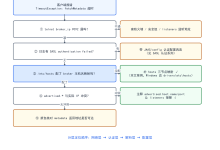
Kafka 幂等生产者处理流程:
#publish-mermaid-1788402170339-0{font-family:\”trebuchet ms\”,verdana,arial,sans-serif;font-size:16px;fill:#333;}@keyframes edge-animation-frame{from{stroke-dashoffset:0;}}@keyframes dash{to{stroke-dashoffset:0;}}#publish-mermaid-1788402170339-0 .edge-animation-slow{stroke-dasharray:9,5!important;stroke-dashoffset:900;animation:dash 50s linear infinite;stroke-linecap:round;}#publish-mermaid-1788402170339-0 .edge-animation-fast{stroke-dasharray:9,5!important;stroke-dashoffset:900;animation:dash 20s linear infinite;stroke-linecap:round;}#publish-mermaid-1788402170339-0 .error-icon{fill:#552222;}#publish-mermaid-1788402170339-0 .error-text{fill:#552222;stroke:#552222;}#publish-mermaid-1788402170339-0 .edge-thickness-normal{stroke-width:1px;}#publish-mermaid-1788402170339-0 .edge-thickness-thick{stroke-width:3.5px;}#publish-mermaid-1788402170339-0 .edge-pattern-solid{stroke-dasharray:0;}#publish-mermaid-1788402170339-0 .edge-thickness-invisible{stroke-width:0;fill:none;}#publish-mermaid-1788402170339-0 .edge-pattern-dashed{stroke-dasharray:3;}#publish-mermaid-1788402170339-0 .edge-pattern-dotted{stroke-dasharray:2;}#publish-mermaid-1788402170339-0 .marker{fill:#333333;stroke:#333333;}#publish-mermaid-1788402170339-0 .marker.cross{stroke:#333333;}#publish-mermaid-1788402170339-0 svg{font-family:\”trebuchet ms\”,verdana,arial,sans-serif;font-size:16px;}#publish-mermaid-1788402170339-0 p{margin:0;}#publish-mermaid-1788402170339-0 .label{font-family:\”trebuchet ms\”,verdana,arial,sans-serif;color:#333;}#publish-mermaid-1788402170339-0 .cluster-label text{fill:#333;}#publish-mermaid-1788402170339-0 .cluster-label span{color:#333;}#publish-mermaid-1788402170339-0 .cluster-label span p{background-color:transparent;}#publish-mermaid-1788402170339-0 .label text,#publish-mermaid-1788402170339-0 span{fill:#333;color:#333;}#publish-mermaid-1788402170339-0 .node rect,#publish-mermaid-1788402170339-0 .node circle,#publish-mermaid-1788402170339-0 .node ellipse,#publish-mermaid-1788402170339-0 .node polygon,#publish-mermaid-1788402170339-0 .node path{fill:#ECECFF;stroke:#9370DB;stroke-width:1px;}#publish-mermaid-1788402170339-0 .rough-node .label text,#publish-mermaid-1788402170339-0 .node .label text,#publish-mermaid-1788402170339-0 .image-shape .label,#publish-mermaid-1788402170339-0 .icon-shape .label{text-anchor:middle;}#publish-mermaid-1788402170339-0 .node .katex path{fill:#000;stroke:#000;stroke-width:1px;}#publish-mermaid-1788402170339-0 .rough-node .label,#publish-mermaid-1788402170339-0 .node .label,#publish-mermaid-1788402170339-0 .image-shape .label,#publish-mermaid-1788402170339-0 .icon-shape .label{text-align:center;}#publish-mermaid-1788402170339-0 .node.clickable{cursor:pointer;}#publish-mermaid-1788402170339-0 .root .anchor path{fill:#333333!important;stroke-width:0;stroke:#333333;}#publish-mermaid-1788402170339-0 .arrowheadPath{fill:#333333;}#publish-mermaid-1788402170339-0 .edgePath .path{stroke:#333333;stroke-width:1px;}#publish-mermaid-1788402170339-0 .flowchart-link{stroke:#333333;fill:none;}#publish-mermaid-1788402170339-0 .edgeLabel{background-color:rgba(232,232,232, 0.8);text-align:center;}#publish-mermaid-1788402170339-0 .edgeLabel p{background-color:rgba(232,232,232, 0.8);}#publish-mermaid-1788402170339-0 .edgeLabel rect{opacity:0.5;background-color:rgba(232,232,232, 0.8);fill:rgba(232,232,232, 0.8);}#publish-mermaid-1788402170339-0 .labelBkg{background-color:rgba(232, 232, 232, 0.5);}#publish-mermaid-1788402170339-0 .cluster rect{fill:#ffffde;stroke:#aaaa33;stroke-width:1px;}#publish-mermaid-1788402170339-0 .cluster text{fill:#333;}#publish-mermaid-1788402170339-0 .cluster span{color:#333;}#publish-mermaid-1788402170339-0 div.mermaidTooltip{position:absolute;text-align:center;max-width:200px;padding:2px;font-family:\”trebuchet ms\”,verdana,arial,sans-serif;font-size:12px;background:hsl(80, 100%, 96.2745098039%);border:1px solid #aaaa33;border-radius:2px;pointer-events:none;z-index:100;}#publish-mermaid-1788402170339-0 .flowchartTitleText{text-anchor:middle;font-size:18px;fill:#333;}#publish-mermaid-1788402170339-0 rect.text{fill:none;stroke-width:0;}#publish-mermaid-1788402170339-0 .icon-shape,#publish-mermaid-1788402170339-0 .image-shape{background-color:rgba(232,232,232, 0.8);text-align:center;}#publish-mermaid-1788402170339-0 .icon-shape p,#publish-mermaid-1788402170339-0 .image-shape p{background-color:rgba(232,232,232, 0.8);padding:2px;}#publish-mermaid-1788402170339-0 .icon-shape .label rect,#publish-mermaid-1788402170339-0 .image-shape .label rect{opacity:0.5;background-color:rgba(232,232,232, 0.8);fill:rgba(232,232,232, 0.8);}#publish-mermaid-1788402170339-0 .label-icon{display:inline-block;height:1em;overflow:visible;vertical-align:-0.125em;}#publish-mermaid-1788402170339-0 .node .label-icon path{fill:currentColor;stroke:revert;stroke-width:revert;}#publish-mermaid-1788402170339-0 .node .neo-node{stroke:#9370DB;}#publish-mermaid-1788402170339-0 [data-look=\”neo\”].node rect,#publish-mermaid-1788402170339-0 [data-look=\”neo\”].cluster rect,#publish-mermaid-1788402170339-0 [data-look=\”neo\”].node polygon{stroke:#9370DB;filter:drop-shadow(1px 2px 2px rgba(185, 185, 185, 1));}#publish-mermaid-1788402170339-0 [data-look=\”neo\”].swimlane.cluster rect{filter:none;}#publish-mermaid-1788402170339-0 [data-look=\”neo\”].node path{stroke:#9370DB;stroke-width:1px;}#publish-mermaid-1788402170339-0 [data-look=\”neo\”].node .outer-path{filter:drop-shadow(1px 2px 2px rgba(185, 185, 185, 1));}#publish-mermaid-1788402170339-0 [data-look=\”neo\”].node .neo-line path{stroke:#9370DB;filter:none;}#publish-mermaid-1788402170339-0 [data-look=\”neo\”].node circle{stroke:#9370DB;filter:drop-shadow(1px 2px 2px rgba(185, 185, 185, 1));}#publish-mermaid-1788402170339-0 [data-look=\”neo\”].node circle .state-start{fill:#000000;}#publish-mermaid-1788402170339-0 [data-look=\”neo\”].icon-shape .icon{fill:#9370DB;filter:drop-shadow(1px 2px 2px rgba(185, 185, 185, 1));}#publish-mermaid-1788402170339-0 [data-look=\”neo\”].icon-shape .icon-neo path{stroke:#9370DB;filter:drop-shadow(1px 2px 2px rgba(185, 185, 185, 1));}#publish-mermaid-1788402170339-0 :root{–mermaid-font-family:\”trebuchet ms\”,verdana,arial,sans-serif;}是否
生产者初始化
获取PID和epoch
发送消息
分配序列号
发送到Broker
Broker验证PID和序列号
序列号是否连续?
更新生产者状态
拒绝重复消息
返回确认
生产者重试