Kafka 数据同步双写方案:实现高可用与数据一致性的双集群架构
1. Kafka 双写架构概述
双写架构是指同时向两个或多个 Kafka 集群写入相同数据,以提高系统可用性和数据可靠性。在关键业务场景中,当主集群出现故障时,可以快速切换到备用集群,确保业务连续性。
双写架构的核心优势:
- 高可用性:单个集群故障不会导致服务中断
- 数据安全:即使一个集群出现问题,数据仍然可用
- 业务连续性:故障切换无需数据恢复时间
- 负载均衡:可分担不同集群的读写压力
适用场景:
- 金融、电商等高可靠性要求的业务系统
- 需要跨地域部署的业务应用
- 数据敏感度高的核心业务系统
2. 集群间异步复制实现
Kafka 集群间异步复制是双写架构的核心技术,主要依靠 MirrorMaker 2.0 或自定义实现完成。
2.1 基于 MirrorMaker 2.0 的实现
MirrorMaker 2.0 是 Kafka 官方提供的集群间数据复制工具,配置简单且可靠性高。
配置步骤:
示例配置:
# mirror-maker-2.properties
# 连接源集群
clusters = source, target
# 源集群配置
source.bootstrap.servers = kafka-source1:9092,kafka-source2:9092
# 目标集群配置
target.bootstrap.servers = kafka-target1:9092,kafka-target2:9092
# 复制流
sync.topic.enable = true
# 复制流量控制
emit.checkpoints.interval.seconds = 60
# 复制偏移量保存
offset.storage.replication.factor = 3
2.2 自定义异步复制实现
对于特殊需求场景,可以基于 Kafka 客户端实现自定义双写逻辑。
关键实现步骤:
示例代码:
public class DualKafkaProducer {
private final Producer<String, String> sourceProducer;
private final Producer<String, String> targetProducer;
public DualKafkaProducer(Properties sourceProps, Properties targetProps) {
this.sourceProducer = new KafkaProducer<>(sourceProps);
this.targetProducer = new KafkaProducer<>(targetProps);
}
public Future<RecordMetadata> send(String topic, String key, String value,
Callback callback) {
// 先发送到源集群
Future<RecordMetadata> sourceFuture = sourceProducer.send(
new ProducerRecord<>(topic, key, value),
(metadata, exception) -> {
if (exception != null) {
// 处理源集群发送失败
System.err.println("Source cluster send failed: " + exception.getMessage());
// 实现重试逻辑
}
// 尝试发送到目标集群
targetProducer.send(
new ProducerRecord<>(topic, key, value),
(targetMetadata, targetException) -> {
if (targetException != null) {
System.err.println("Target cluster send failed: " + targetException.getMessage());
// 实现重试逻辑
}
// 处理最终结果
if (callback != null) {
callback.onComplete(metadata != null ?
new CombinedRecordMetadata(metadata, targetMetadata) : null,
exception != null ? exception :
(targetException != null ? targetException : null));
}
}
);
}
);
return new FutureWrapper<>(sourceFuture);
}
}
3. 延迟监控机制设计
在双写架构中,复制延迟是衡量系统健康度的重要指标。过高的延迟可能导致数据一致性问题。
3.1 延迟检测方法
源集群和目标集群之间的消息延迟可以通过以下方式检测:
public class LatencyMonitor {
private final KafkaConsumer<String, String> sourceConsumer;
private final KafkaConsumer<String, String> targetConsumer;
public void checkLatency(String topic, long timeout) {
// 获取源集群最新消息
SourceRecord sourceRecord = getLatestRecord(sourceConsumer, topic, timeout);
// 获取目标集群最新消息
TargetRecord targetRecord = getLatestRecord(targetConsumer, topic, timeout);
// 计算延迟
long delay = targetRecord.getTimestamp() – sourceRecord.getTimestamp();
if (delay > LATENCY_THRESHOLD) {
alertHighLatency(delay, topic);
}
}
}
# 使用 kafka-consumer-groups 工具
kafka-consumer-groups –bootstrap-server source-cluster:9092 –describe –group consumer-group
kafka-consumer-groups –bootstrap-server target-cluster:9092 –describe –group consumer-group
3.2 延迟监控告警
设计延迟告警机制,确保及时发现并处理异常:
延迟监控指标建议:
| 指标 | 正常范围 | 警告阈值 | 严重阈值 | 处理建议 |
|——|———|———|———|———|
| 单条消息延迟 | < 100ms | 100-500ms | > 500ms | 检查网络状况,调整批处理大小 |
| 主题延迟 | < 1s | 1-5s | > 5s | 检查消费者配置,增加分区数 |
| 整体延迟 | < 5s | 5-30s | > 30s | 审查集群资源,考虑扩容 |
4. 一致性校验方法
双写架构中,确保源集群和目标集群的数据一致性至关重要。
4.1 内容哈希校验
使用哈希算法对消息内容进行一致性校验:
public class ConsistencyChecker {
private final Producer<String, String> sourceProducer;
private final Producer<String, String> targetProducer;
public void verifyConsistency(String topic, long partition, long offset) {
// 从源集群获取消息
SourceRecord sourceRecord = fetchRecord(sourceProducer, topic, partition, offset);
// 从目标集群获取相同消息
TargetRecord targetRecord = fetchRecord(targetProducer, topic, partition, offset);
// 计算哈希值
String sourceHash = calculateHash(sourceRecord.getValue());
String targetHash = calculateHash(targetRecord.getValue());
if (!sourceHash.equals(targetHash)) {
handleInconsistency(sourceRecord, targetRecord);
}
}
private String calculateHash(String value) {
return DigestUtils.md5Hex(value);
}
}
4.2 校验机制设计
设计高效的一致性校验机制:
校验策略对比:
| 校验策略 | 资源消耗 | 准确性 | 实施复杂度 | 适用场景 |
|———|———|——-|———–|———|
| 全量校验 | 高 | 高 | 低 | 关键业务系统,定期执行 |
| 增量校验 | 低 | 高 | 中 | 常规业务系统,实时执行 |
| 抽样校验 | 低 | 中 | 低 | 非关键业务系统,高频执行 |
5. 实施与注意事项
成功实施 Kafka 数据同步双写方案需要考虑以下几个方面:
5.1 最小可运行示例
以下是一个简单但完整的双写实现示例:
public class DualKafkaExample {
public static void main(String[] args) {
// 配置源集群
Properties sourceProps = new Properties();
sourceProps.put("bootstrap.servers", "source1:9092,source2:9092");
sourceProps.put("key.serializer", "org.apache.kafka.common.serialization.StringSerializer");
sourceProps.put("value.serializer", "org.apache.kafka.common.serialization.StringSerializer");
// 配置目标集群
Properties targetProps = new Properties();
targetProps.put("bootstrap.servers", "target1:9092,target2:9092");
targetProps.put("key.serializer", "org.apache.kafka.common.serialization.StringSerializer");
targetProps.put("value.serializer", "org.apache.kafka.common.serialization.StringSerializer");
// 创建双写生产者
DualKafkaProducer dualProducer = new DualKafkaProducer(sourceProps, targetProps);
// 发送消息
try {
for (int i = 0; i < 10; i++) {
String message = "Message " + i;
dualProducer.send("test-topic", "key" + i, message,
(metadata, exception) -> {
if (exception == null) {
System.out.println("Message sent successfully");
} else {
System.err.println("Failed to send message: " + exception.getMessage());
}
});
}
} finally {
dualProducer.close();
}
}
}
5.2 实施注意事项
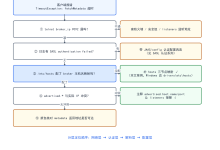
#publish-mermaid-1788403050281-0{font-family:\”trebuchet ms\”,verdana,arial,sans-serif;font-size:16px;fill:#333;}@keyframes edge-animation-frame{from{stroke-dashoffset:0;}}@keyframes dash{to{stroke-dashoffset:0;}}#publish-mermaid-1788403050281-0 .edge-animation-slow{stroke-dasharray:9,5!important;stroke-dashoffset:900;animation:dash 50s linear infinite;stroke-linecap:round;}#publish-mermaid-1788403050281-0 .edge-animation-fast{stroke-dasharray:9,5!important;stroke-dashoffset:900;animation:dash 20s linear infinite;stroke-linecap:round;}#publish-mermaid-1788403050281-0 .error-icon{fill:#552222;}#publish-mermaid-1788403050281-0 .error-text{fill:#552222;stroke:#552222;}#publish-mermaid-1788403050281-0 .edge-thickness-normal{stroke-width:1px;}#publish-mermaid-1788403050281-0 .edge-thickness-thick{stroke-width:3.5px;}#publish-mermaid-1788403050281-0 .edge-pattern-solid{stroke-dasharray:0;}#publish-mermaid-1788403050281-0 .edge-thickness-invisible{stroke-width:0;fill:none;}#publish-mermaid-1788403050281-0 .edge-pattern-dashed{stroke-dasharray:3;}#publish-mermaid-1788403050281-0 .edge-pattern-dotted{stroke-dasharray:2;}#publish-mermaid-1788403050281-0 .marker{fill:#333333;stroke:#333333;}#publish-mermaid-1788403050281-0 .marker.cross{stroke:#333333;}#publish-mermaid-1788403050281-0 svg{font-family:\”trebuchet ms\”,verdana,arial,sans-serif;font-size:16px;}#publish-mermaid-1788403050281-0 p{margin:0;}#publish-mermaid-1788403050281-0 .label{font-family:\”trebuchet ms\”,verdana,arial,sans-serif;color:#333;}#publish-mermaid-1788403050281-0 .cluster-label text{fill:#333;}#publish-mermaid-1788403050281-0 .cluster-label span{color:#333;}#publish-mermaid-1788403050281-0 .cluster-label span p{background-color:transparent;}#publish-mermaid-1788403050281-0 .label text,#publish-mermaid-1788403050281-0 span{fill:#333;color:#333;}#publish-mermaid-1788403050281-0 .node rect,#publish-mermaid-1788403050281-0 .node circle,#publish-mermaid-1788403050281-0 .node ellipse,#publish-mermaid-1788403050281-0 .node polygon,#publish-mermaid-1788403050281-0 .node path{fill:#ECECFF;stroke:#9370DB;stroke-width:1px;}#publish-mermaid-1788403050281-0 .rough-node .label text,#publish-mermaid-1788403050281-0 .node .label text,#publish-mermaid-1788403050281-0 .image-shape .label,#publish-mermaid-1788403050281-0 .icon-shape .label{text-anchor:middle;}#publish-mermaid-1788403050281-0 .node .katex path{fill:#000;stroke:#000;stroke-width:1px;}#publish-mermaid-1788403050281-0 .rough-node .label,#publish-mermaid-1788403050281-0 .node .label,#publish-mermaid-1788403050281-0 .image-shape .label,#publish-mermaid-1788403050281-0 .icon-shape .label{text-align:center;}#publish-mermaid-1788403050281-0 .node.clickable{cursor:pointer;}#publish-mermaid-1788403050281-0 .root .anchor path{fill:#333333!important;stroke-width:0;stroke:#333333;}#publish-mermaid-1788403050281-0 .arrowheadPath{fill:#333333;}#publish-mermaid-1788403050281-0 .edgePath .path{stroke:#333333;stroke-width:1px;}#publish-mermaid-1788403050281-0 .flowchart-link{stroke:#333333;fill:none;}#publish-mermaid-1788403050281-0 .edgeLabel{background-color:rgba(232,232,232, 0.8);text-align:center;}#publish-mermaid-1788403050281-0 .edgeLabel p{background-color:rgba(232,232,232, 0.8);}#publish-mermaid-1788403050281-0 .edgeLabel rect{opacity:0.5;background-color:rgba(232,232,232, 0.8);fill:rgba(232,232,232, 0.8);}#publish-mermaid-1788403050281-0 .labelBkg{background-color:rgba(232, 232, 232, 0.5);}#publish-mermaid-1788403050281-0 .cluster rect{fill:#ffffde;stroke:#aaaa33;stroke-width:1px;}#publish-mermaid-1788403050281-0 .cluster text{fill:#333;}#publish-mermaid-1788403050281-0 .cluster span{color:#333;}#publish-mermaid-1788403050281-0 div.mermaidTooltip{position:absolute;text-align:center;max-width:200px;padding:2px;font-family:\”trebuchet ms\”,verdana,arial,sans-serif;font-size:12px;background:hsl(80, 100%, 96.2745098039%);border:1px solid #aaaa33;border-radius:2px;pointer-events:none;z-index:100;}#publish-mermaid-1788403050281-0 .flowchartTitleText{text-anchor:middle;font-size:18px;fill:#333;}#publish-mermaid-1788403050281-0 rect.text{fill:none;stroke-width:0;}#publish-mermaid-1788403050281-0 .icon-shape,#publish-mermaid-1788403050281-0 .image-shape{background-color:rgba(232,232,232, 0.8);text-align:center;}#publish-mermaid-1788403050281-0 .icon-shape p,#publish-mermaid-1788403050281-0 .image-shape p{background-color:rgba(232,232,232, 0.8);padding:2px;}#publish-mermaid-1788403050281-0 .icon-shape .label rect,#publish-mermaid-1788403050281-0 .image-shape .label rect{opacity:0.5;background-color:rgba(232,232,232, 0.8);fill:rgba(232,232,232, 0.8);}#publish-mermaid-1788403050281-0 .label-icon{display:inline-block;height:1em;overflow:visible;vertical-align:-0.125em;}#publish-mermaid-1788403050281-0 .node .label-icon path{fill:currentColor;stroke:revert;stroke-width:revert;}#publish-mermaid-1788403050281-0 .node .neo-node{stroke:#9370DB;}#publish-mermaid-1788403050281-0 [data-look=\”neo\”].node rect,#publish-mermaid-1788403050281-0 [data-look=\”neo\”].cluster rect,#publish-mermaid-1788403050281-0 [data-look=\”neo\”].node polygon{stroke:#9370DB;filter:drop-shadow(1px 2px 2px rgba(185, 185, 185, 1));}#publish-mermaid-1788403050281-0 [data-look=\”neo\”].swimlane.cluster rect{filter:none;}#publish-mermaid-1788403050281-0 [data-look=\”neo\”].node path{stroke:#9370DB;stroke-width:1px;}#publish-mermaid-1788403050281-0 [data-look=\”neo\”].node .outer-path{filter:drop-shadow(1px 2px 2px rgba(185, 185, 185, 1));}#publish-mermaid-1788403050281-0 [data-look=\”neo\”].node .neo-line path{stroke:#9370DB;filter:none;}#publish-mermaid-1788403050281-0 [data-look=\”neo\”].node circle{stroke:#9370DB;filter:drop-shadow(1px 2px 2px rgba(185, 185, 185, 1));}#publish-mermaid-1788403050281-0 [data-look=\”neo\”].node circle .state-start{fill:#000000;}#publish-mermaid-1788403050281-0 [data-look=\”neo\”].icon-shape .icon{fill:#9370DB;filter:drop-shadow(1px 2px 2px rgba(185, 185, 185, 1));}#publish-mermaid-1788403050281-0 [data-look=\”neo\”].icon-shape .icon-neo path{stroke:#9370DB;filter:drop-shadow(1px 2px 2px rgba(185, 185, 185, 1));}#publish-mermaid-1788403050281-0 :root{–mermaid-font-family:\”trebuchet ms\”,verdana,arial,sans-serif;}
生产者发送消息
源集群接收
源集群确认
异步复制到目标集群
目标集群接收
目标集群确认
消费者消费
延迟监控
延迟计算
延迟告警
一致性校验
一致性对比
差异处理